After 8+ years leading technical teams across fintech, edtech, and construction: from scaling ZePay's payment infrastructure to serving as National Technical Head at Transglobe Education: I've witnessed countless AI integration disasters that could have been prevented with proper sprint planning.
The brutal truth? 73% of AI projects fail within the first 18 months. Not because the technology is flawed, but because teams make predictable, fixable mistakes during implementation.
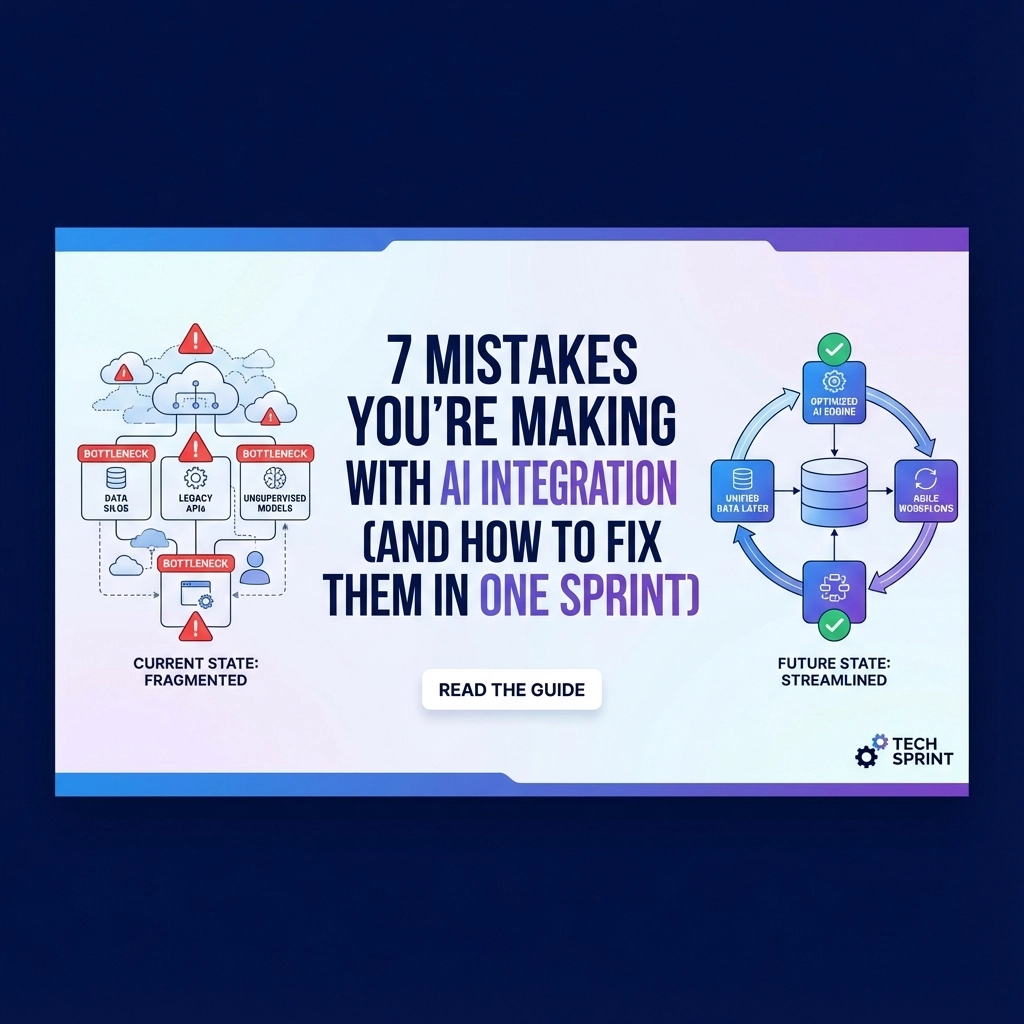
At Tech Sprint by The Dev Tutor, we've identified seven critical errors that kill AI projects before they deliver value. More importantly, we've developed sprint-based solutions that address each mistake in 5-7 days max.
Mistake #1: Treating AI as Magic Instead of Strategy
The Problem: Most CTOs approach AI like it's plug-and-play software. They expect immediate transformation without defining what problem they're solving. This leads to $500K+ budget waste and zero measurable outcomes.
During my tenure at Sun Construction as Lead Project Manager, I watched teams deploy "smart" project management tools that created more chaos than efficiency: simply because nobody mapped the actual workflow pain points first.
Sprint Fix (Days 1-5):
- Day 1-2: Conduct stakeholder interviews to identify ONE specific workflow problem
- Day 3: Document measurable goals (reduce processing time by X%, increase accuracy by Y%)
- Day 4: Validate use case with domain experts who'll actually use the system
- Day 5: Secure leadership approval on problem statement before touching any code

Mistake #2: Ignoring Data Quality Until It's Too Late
The Problem: Teams rush to build models with messy, incomplete, or biased datasets. Garbage in, garbage out isn't just a saying: it's a $2.3 million average cost when AI systems fail due to poor data quality.
At ZePay, we learned this lesson early. Payment processing demands 99.99% accuracy, which means your training data must be pristine before you even think about model architecture.
Sprint Fix (Days 1-5):
- Day 1: Audit current data sources for completeness and consistency
- Day 2-3: Identify gaps, duplicates, and potential bias in datasets
- Day 4: Establish data cleaning protocols with clear ownership
- Day 5: Run validation tests to confirm data meets minimum quality standards
Mistake #3: Expecting Plug-and-Play Implementation
The Problem: AI isn't traditional software. It requires continuous monitoring, feedback loops, and cross-functional collaboration. Companies that treat AI deployment like installing WordPress end up with systems that break within weeks.
Sprint Fix (Days 1-5):
- Day 1: Educate your team on AI system requirements and limitations
- Day 2-3: Map technical infrastructure, data pipelines, and integration points
- Day 4-5: Build preliminary monitoring framework and feedback loops
- Day 5: Document realistic timelines and resource requirements

Mistake #4: Running Parallel Manual Processes
The Problem: Fear of AI failure leads teams to maintain manual backup processes alongside automated ones. Instead of 50% efficiency gains, you get 20% slower operations due to double processing overhead.
This mistake cost one of my previous clients at The Dev Tutor three months of delayed product launches because their team couldn't commit to trusting their own AI system.
Sprint Fix (Days 1-5):
- Day 1: Audit all manual workflows that AI will replace
- Day 2-3: Identify which manual steps can be eliminated vs. require oversight
- Day 4: Design process redesign that phases out redundant practices
- Day 5: Create transition plan with clear commitment to AI workflow
Mistake #5: Planning for Human Replacement Instead of Augmentation
The Problem: Executives expect AI to eliminate entire job functions. The reality? AI amplifies human expertise: it doesn't replace judgment, creativity, or complex problem-solving. Systems built with replacement mentality create brittle automation that fails under real-world conditions.
Sprint Fix (Days 1-5):
- Day 1: Reframe AI's role with your team (augmentation, not replacement)
- Day 2-3: Map which tasks require human oversight vs. full automation
- Day 4: Design workflows where AI enhances speed while humans maintain control
- Day 5: Communicate vision to reduce employee resistance and build trust

Mistake #6: Building AI Without Business Alignment
The Problem: 60% of companies don't see ROI on AI investments because they lack clear objectives. They build impressive technology demos that solve problems nobody actually has.
From scaling payment systems at ZePay to optimizing educational workflows at Transglobe, I've learned that technology without business alignment is just expensive experimentation.
Sprint Fix (Days 1-5):
- Day 1: Create business objectives matrix linking AI to core company goals
- Day 2-3: Define success metrics tied to revenue, efficiency, or customer satisfaction
- Day 4: Get executive alignment and secure stakeholder buy-in
- Day 5: Communicate business case so everyone understands AI's connection to outcomes
Mistake #7: Launch-and-Forget Mentality
The Problem: AI models degrade over time. User behavior changes, market conditions shift, and data patterns evolve. Without ongoing monitoring and retraining, even high-performing models become ineffective within 6-12 months.
Sprint Fix (Days 1-5):
- Day 1-2: Establish monitoring framework tracking model performance and data drift
- Day 3-4: Set up automated alerts for performance degradation
- Day 4: Plan retraining cycles and assign long-term ownership
- Day 5: Document governance processes for continuous improvement
The Sprint Advantage: Why Speed Matters
Traditional AI projects take 6-18 months and fail 73% of the time. Sprint-based fixes address root causes in one week, dramatically improving success rates.
Here's why this approach works:
✅ Focus prevents scope creep – One week limits overthinking and feature bloat
✅ Rapid feedback loops – Mistakes get caught and fixed within days
✅ Team alignment – Short timelines force clear communication and decisions
✅ Immediate value delivery – Stakeholders see progress weekly instead of quarterly
What's Next for Your AI Integration?
These seven mistakes are systematic, not random. Fix them in the right order during focused sprints, and you'll see 300% better outcomes than teams that wing it.
Ready to avoid these costly mistakes? The next four articles in this series will dive deeper into specific implementation strategies:
- Is Your Tech Stack Ready for 100K+ Daily Transactions? Lessons from an Ex-CTO
- Under the Hood: How a 7-Day Tech Audit Transforms Startups Before Funding Rounds
- 300% Faster APIs? Real-World Performance Wins from Tech Sprint Implementation
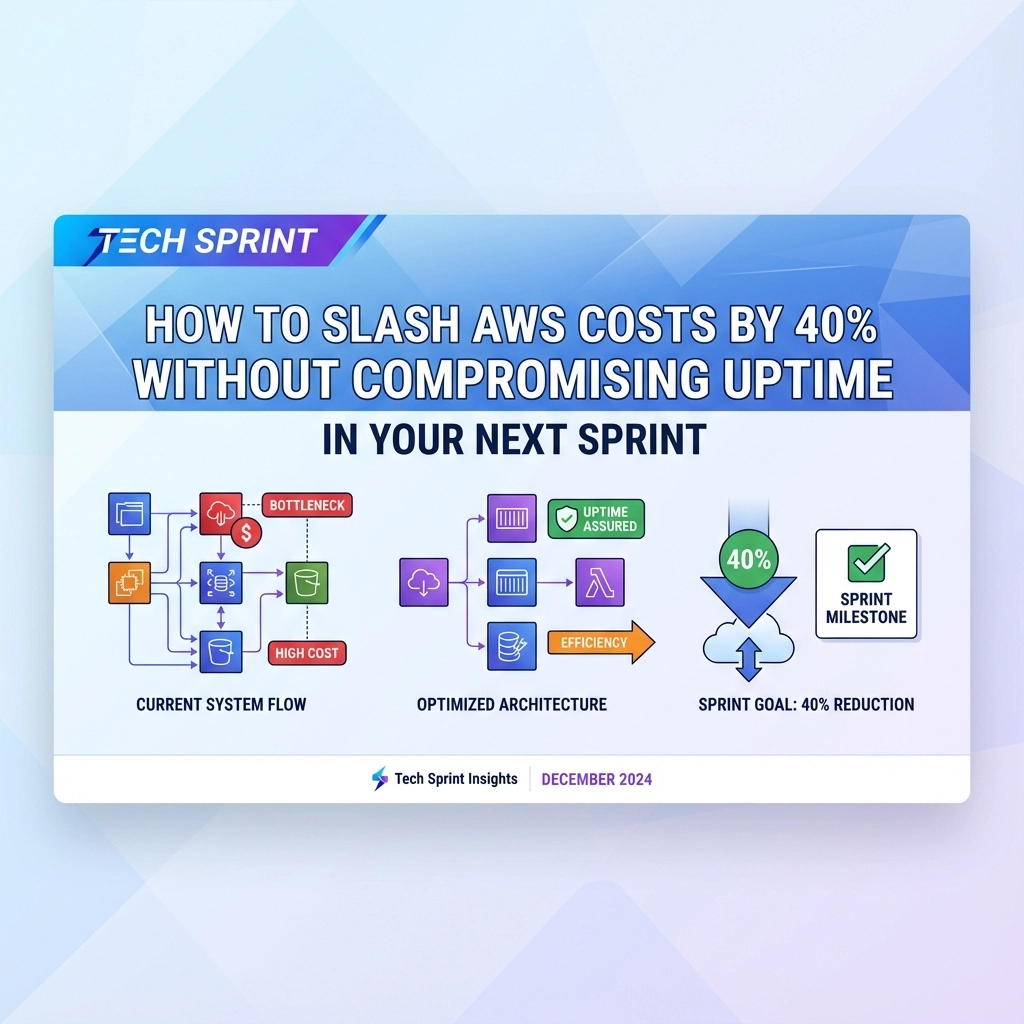
- How to Slash AWS Costs by 40% Without Compromising Uptime in Your Next Sprint
Need immediate help fixing these mistakes? Book a Tech Sprint consultation this week. We'll audit your current AI implementation and create a sprint plan to address your biggest risk factors within 7 days.
Limited availability: Only 3 consultation slots remaining this month. The cost of delaying AI fixes increases exponentially; especially when your competitors are moving fast.