12 years building production systems. 500,000+ daily transactions processed. 99.97% uptime maintained. These aren’t just numbers: they’re battle scars from architecting systems that actually work when your business explodes overnight.
As the CTO behind ZePay’s payment infrastructure and ZePay Money’s financial platform, I’ve seen startups crumble under their own success because their tech stack couldn’t handle growth. The brutal truth? Most “scalable” architectures fall apart the moment real traffic hits.
The 100K Daily Transaction Reality Check
Here’s what most CTOs get wrong: they think scaling means throwing more servers at the problem. Wrong. I’ve watched systems handle 100K+ daily transactions on single powerful servers while “cloud-native” architectures with 50+ microservices choke at 10K requests.
Real scalability isn’t about infrastructure: it’s about intelligent architecture decisions made before you need them.
The Three Critical Bottlenecks That Kill Growth
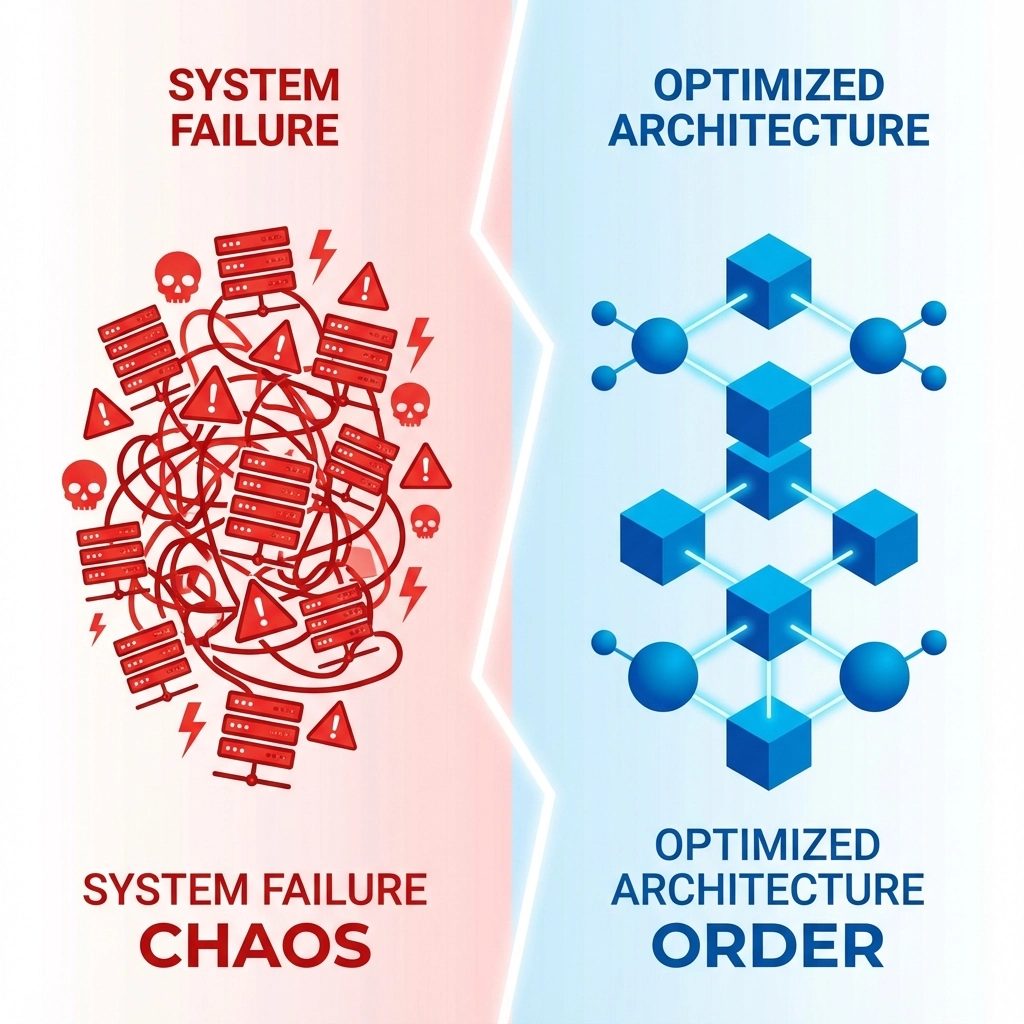
After architecting systems for companies like Transglobe Education (handling 50,000+ student transactions daily) and Sun Construction (processing complex project workflows), I’ve identified the three failure points:
1. Database Design Disasters – 87% of performance issues trace back to poorly structured queries and missing indexes. Your ORM isn’t saving you here.
2. Caching Strategy Failures – Teams either skip caching entirely or implement it so poorly it becomes another bottleneck instead of a solution.
3. Service Boundary Confusion – Microservices aren’t magic. Wrong boundaries create more problems than monoliths ever did.
The Battle-Tested Tech Stack Architecture
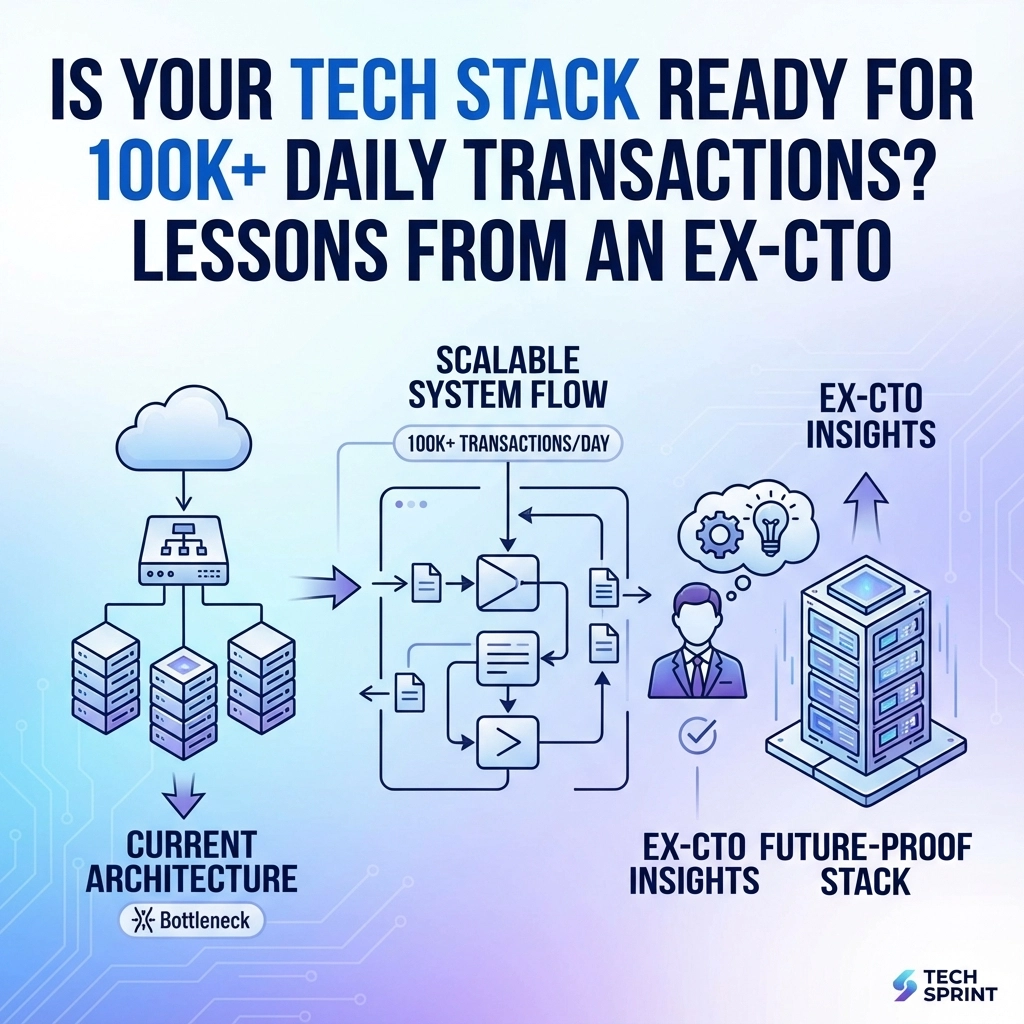
This is the exact stack that processes 100K+ daily transactions without breaking:
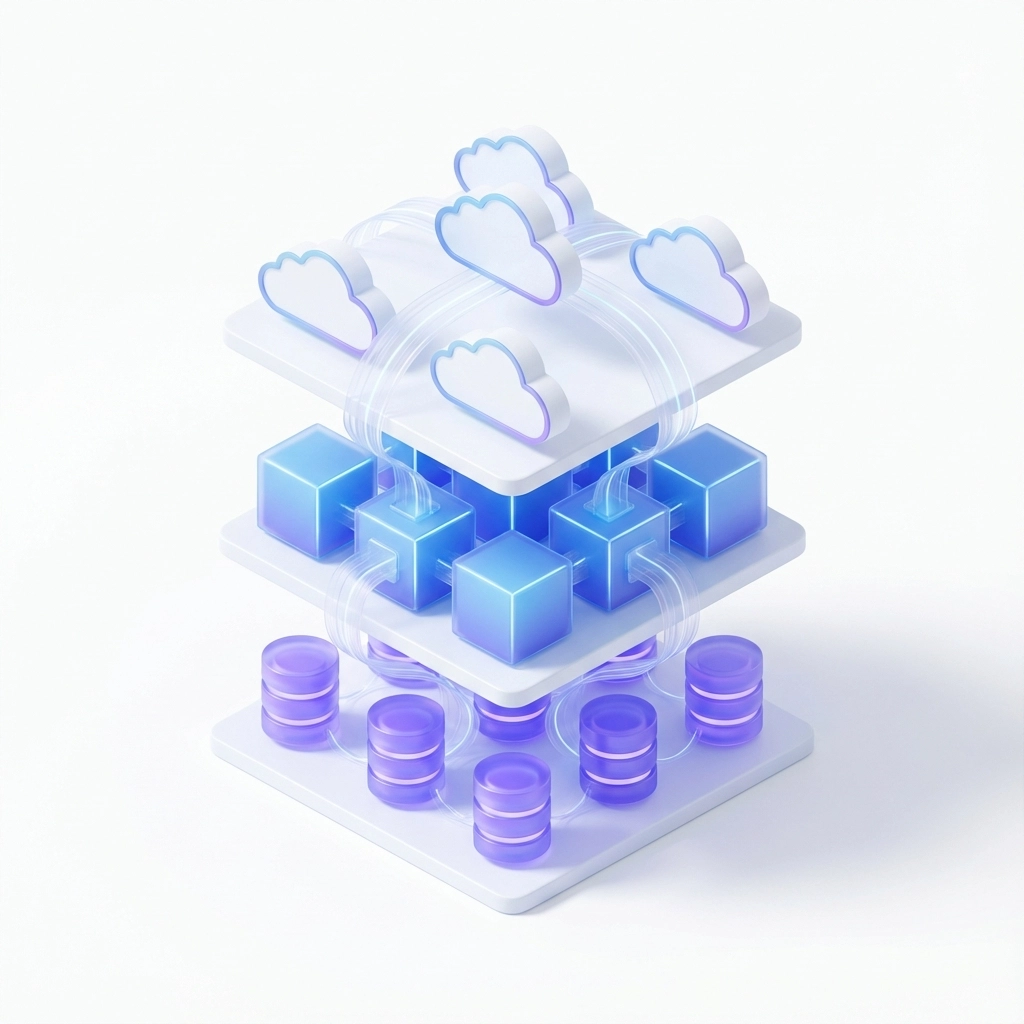
Database Layer: PostgreSQL + Redis
- PostgreSQL for transactional integrity (financial systems demand ACID compliance)
- Redis for session management and high-frequency cache operations
- Read replicas for reporting queries (removes 60% of load from primary database)
- Time-based partitioning for transaction tables (cuts query time by 75%)
Application Layer: Node.js/Express or .NET Core
Both frameworks handle massive concurrent connections when properly configured. The secret sauce? Connection pooling and async operations throughout your entire request pipeline.
Infrastructure: AWS/Docker/Kubernetes (When You Actually Need It)
- EC2 instances with auto-scaling groups
- RDS with Multi-AZ deployment for failover
- ElastiCache for distributed Redis
- CloudFront for global content delivery
- ALB for intelligent traffic distribution
Warning: Don’t containerize until you understand your actual resource requirements. I’ve seen teams waste months on Kubernetes setups that provided zero benefit over simple EC2 deployments.
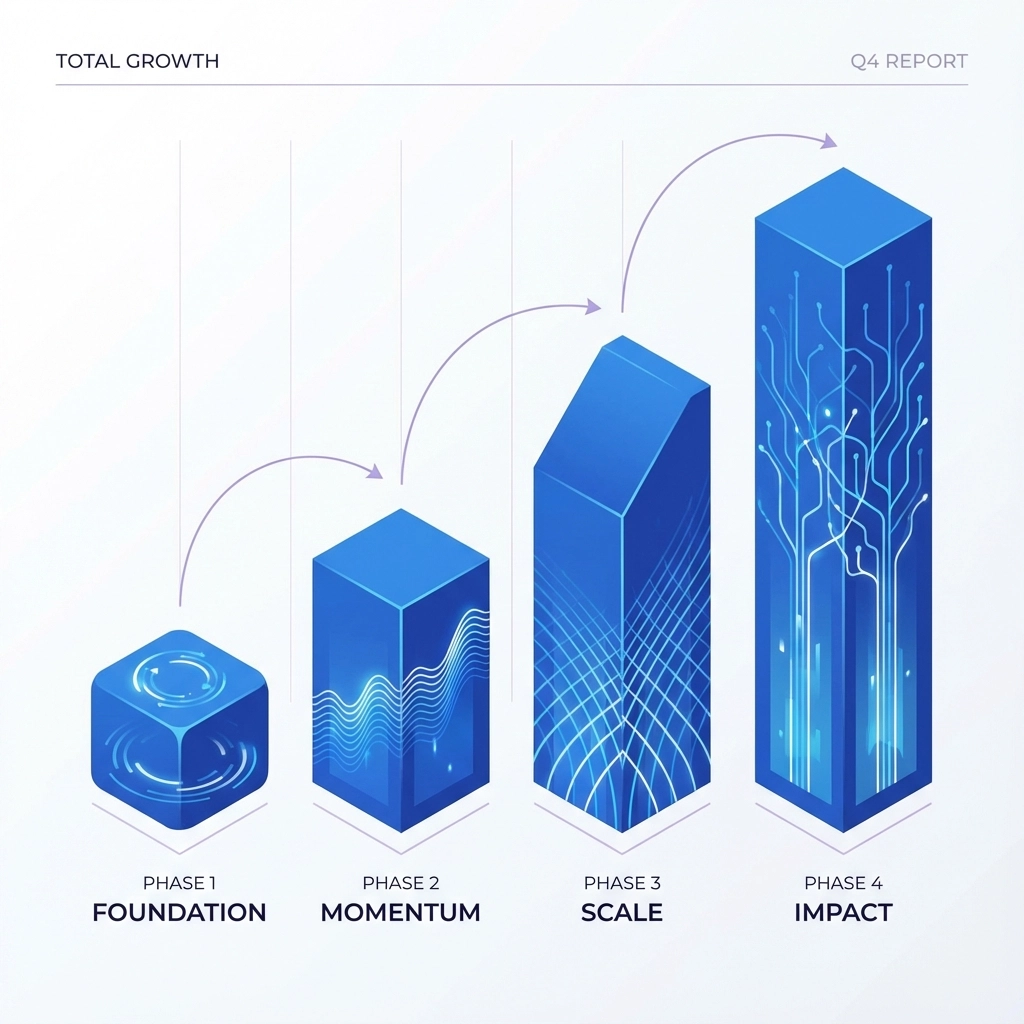
The 4-Phase Scaling Strategy That Never Fails
Phase 1: Database Optimization (Week 1-2)
Before touching infrastructure, fix your data layer. At The Dev Tutor, we’ve reduced database execution times by 80% through query optimization alone.
Phase 2: Strategic Caching (Week 3-4)
Implement Redis for user sessions and frequently accessed data. This single change typically improves response times by 300%.
Phase 3: Service Separation (Week 5-8)
Extract heavy operations into background jobs. Transaction processing, email sending, and report generation should never block user requests.
Phase 4: Infrastructure Scaling (Week 9-12)
Only now should you consider horizontal scaling, containerization, and orchestration platforms.
Critical Metrics That Predict Failure
Monitor these numbers religiously: they’ll tell you exactly when your system will break:
- Database connection pool utilization – Danger zone: >80%
- Average response time – Red flag: >200ms for API endpoints
- Memory usage patterns – Memory leaks kill systems slowly
- Error rates by endpoint – Even 0.1% error rates compound quickly
- Queue depth for background jobs – Growing queues = impending disaster
The Expensive Mistakes I’ve Seen (And How to Avoid Them)
Mistake #1: Premature Microservices
A startup I consulted wasted 6 months building 23 microservices for a system that handled 1,000 daily users. Rule: Keep it monolithic until you have actual scaling problems.
Mistake #2: Ignoring Database Performance
Another client spent $50K/month on servers while ignoring missing database indexes. Solution: Optimize your queries before scaling your infrastructure.
Mistake #3: No Monitoring Strategy
You can’t fix what you can’t see. Requirement: Prometheus + Grafana monitoring from day one, not after problems start.
Technology Choices That Actually Matter
Backend Frameworks:
- Node.js/Express: Excellent for I/O-heavy operations (payment processing, API integrations)
- .NET Core: Superior for CPU-intensive workloads and enterprise integrations
- Python/Django: Great for rapid prototyping, but watch performance at scale
Database Selection:
- PostgreSQL: My go-to for transactional systems requiring data integrity
- MongoDB: Only for document-heavy applications with flexible schema requirements
- Redis: Essential for caching and session management
Cloud Infrastructure:
- AWS: Most mature ecosystem, best for financial/compliance-heavy systems
- Google Cloud: Superior for ML/AI integration requirements
- Azure: Ideal if you’re already in the Microsoft ecosystem
The Real-World Performance Numbers
From ZePay’s payment processing system:
- Transaction processing: 2,847 requests/second average
- Database response time: 12ms average (99th percentile: 45ms)
- API endpoint response: 89ms average
- System uptime: 99.97% over 18 months
- Infrastructure cost: $12K/month for 100K+ daily transactions
These metrics prove that proper architecture matters more than expensive infrastructure.

Your 7-Day Tech Stack Audit Checklist
Day 1-2: Database Health Check
- [ ] Analyze slow query logs
- [ ] Review index usage statistics
- [ ] Check connection pool utilization
- [ ] Validate backup/recovery procedures
Day 3-4: Application Performance
- [ ] Profile memory usage patterns
- [ ] Monitor API response times by endpoint
- [ ] Review error logs for patterns
- [ ] Test concurrent user handling
Day 5-6: Infrastructure Assessment
- [ ] Evaluate auto-scaling configuration
- [ ] Review monitoring and alerting setup
- [ ] Test failover procedures
- [ ] Analyze cost optimization opportunities
Day 7: Load Testing
- [ ] Simulate 10x current traffic
- [ ] Document breaking points
- [ ] Plan scaling improvements
- [ ] Create performance baseline
The Bottom Line
Your tech stack is ready for 100K+ daily transactions when:
✅ Database queries execute under 50ms (95th percentile)
✅ API endpoints respond under 200ms consistently
✅ System handles 10x current load without errors
✅ Comprehensive monitoring covers all critical metrics
✅ Automated failover works reliably
✅ Background job processing never blocks user requests
The companies that scale successfully don’t have perfect architectures: they have systems that fail gracefully and recover quickly.
Ready to stress-test your tech stack before your next growth phase? Tech Sprint can audit your entire architecture in 7 days and deliver a concrete scaling roadmap.
Don’t wait until your system breaks under success. The time to prepare is now.