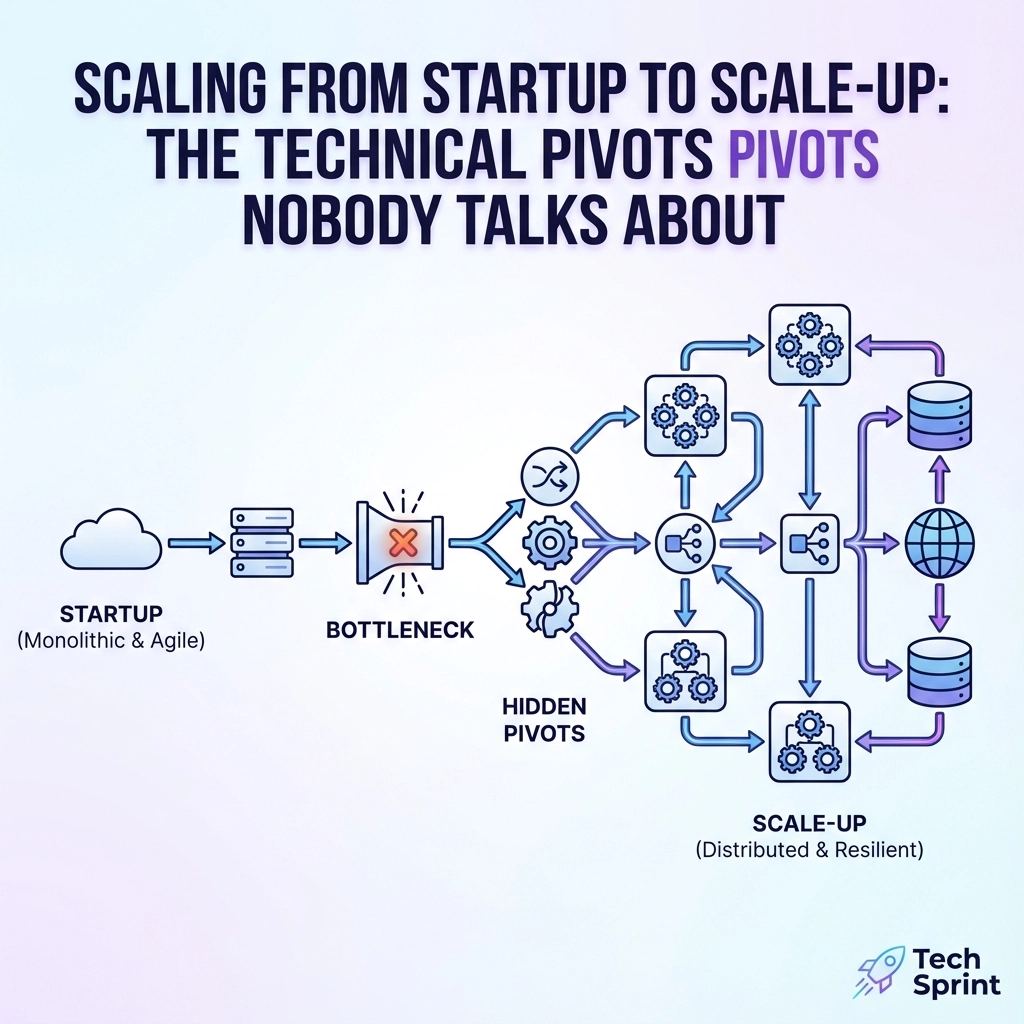
After 8+ years building and scaling tech teams across fintech, edtech, and construction platforms, I’ve watched hundreds of startups hit the same invisible wall. The wall between “it works” and “it scales.”
Most founders obsess over product-market fit. VCs talk about go-to-market strategy. But nobody discusses the brutal technical pivots that make or break the transition from startup to scale-up.
The $2M Infrastructure Shock Nobody Warns You About
When Zepay crossed 50,000 daily transactions, our “perfectly functional” architecture crumbled in 72 hours. The database that handled 1,000 users beautifully started timing out. API response times jumped from 200ms to 8 seconds. Our monitoring system crashed before it could tell us what was crashing.
Sound familiar? 97% of startups face this exact scenario between months 18-36 of growth.
The problem isn’t your code. It’s that startup-phase architecture is fundamentally incompatible with scale-up demands. What got you here won’t get you there: and the pivot window is brutally narrow.
Technical Pivot #1: The Database Architecture Overhaul
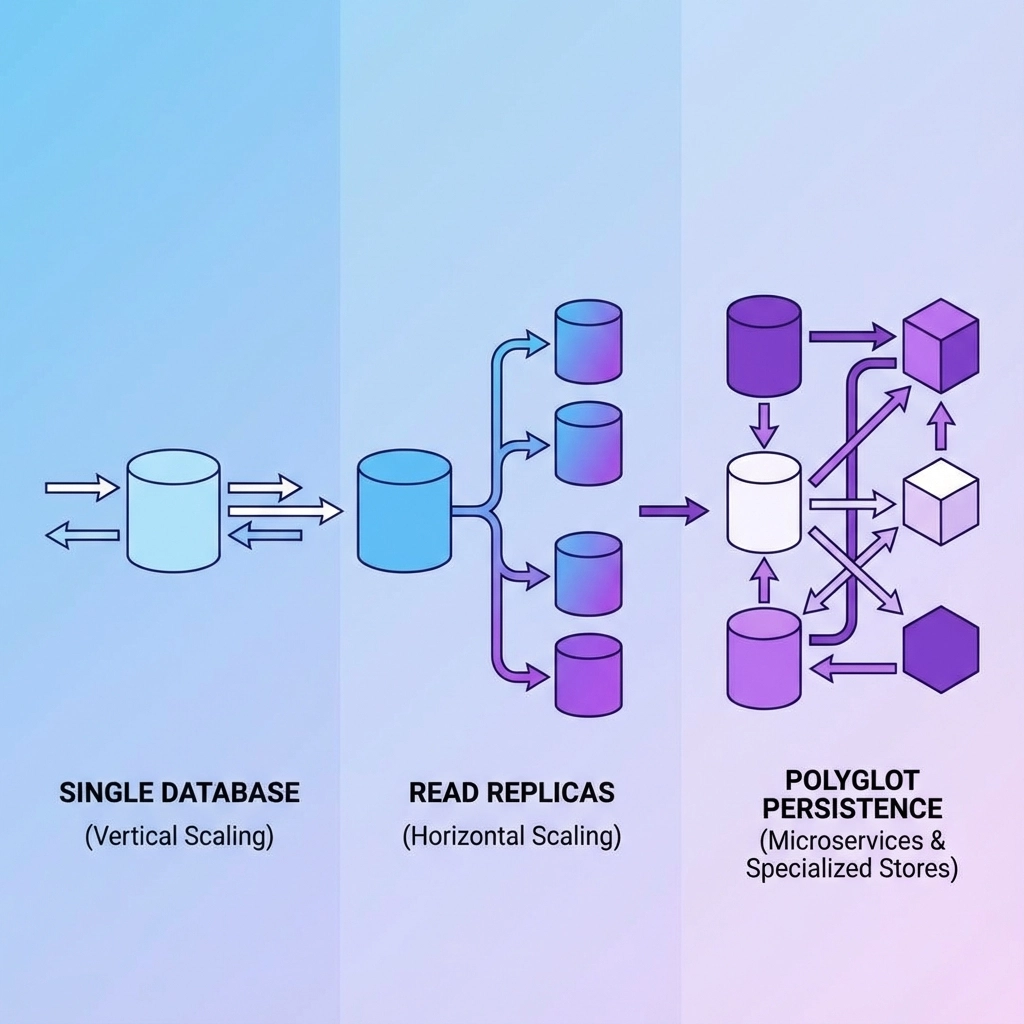
Your MySQL setup that served 10,000 users will implode at 100,000. Period.
During my time scaling systems at TransGlobe Education, we learned this lesson with 200,000+ student records. The relational database approach that worked perfectly for our first 5,000 users became a bottleneck nightmare.
The Hidden Costs:
- 3-6 months of dev team focus
- $50K-$200K in infrastructure costs
- 40-60% performance degradation during migration
The Smart Pivot Strategy:
- Start the conversation at 70% capacity – Not when you’re already drowning
- Implement read replicas immediately – Buy yourself 6-12 months of runway
- Plan for polyglot persistence – Different data types need different storage solutions
Most CTOs wait too long. They optimize queries instead of pivoting architecture. Don’t optimize a fundamentally flawed foundation.
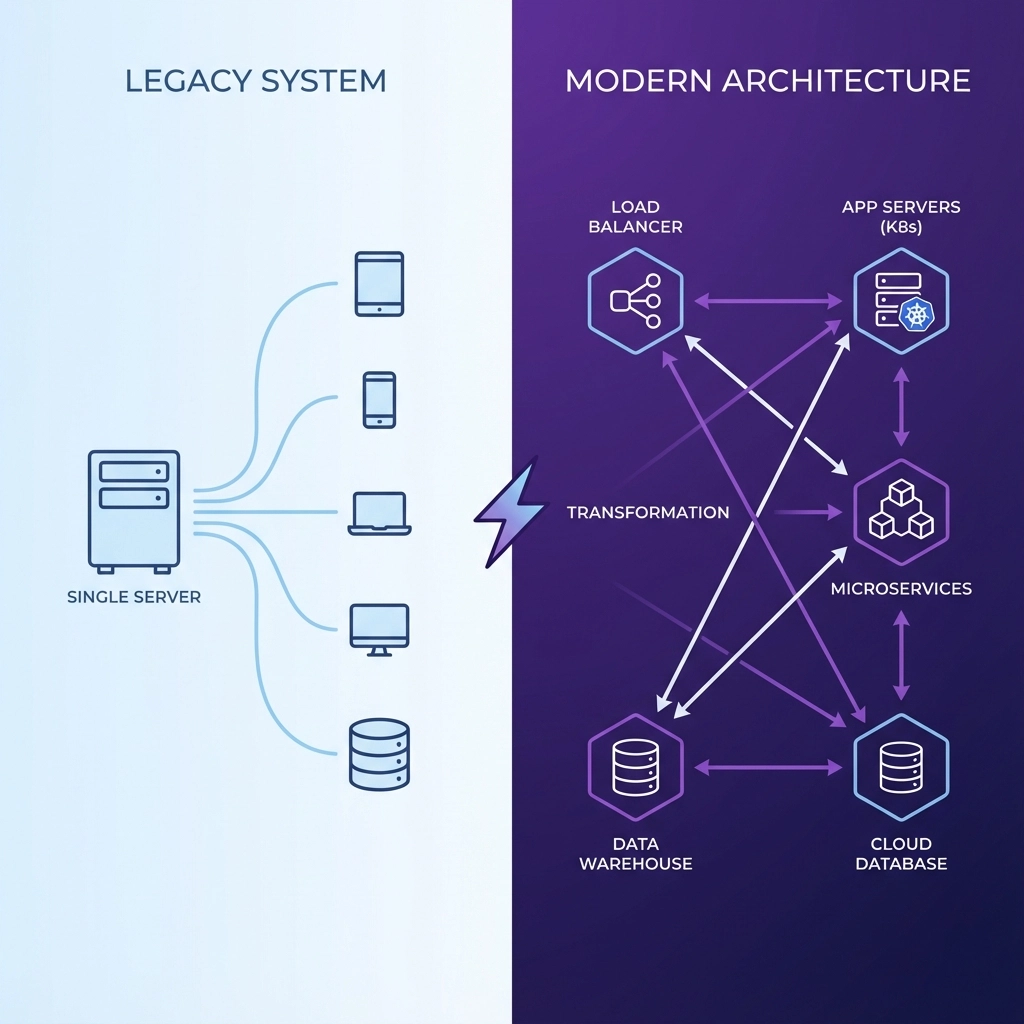
Technical Pivot #2: From Monolith to Service-Oriented Architecture
Your single codebase that “does everything” becomes your biggest liability during scale-up.
At Zepay Money, we had 40,000 lines of tightly coupled payment processing code. Every feature release risked breaking the entire system. Deploy times hit 45 minutes. Rolling back meant full system downtime.
The Breaking Point Indicators:
- Deploy frequency drops below twice per week
- Bug fixes require testing unrelated features
- New team members need 3+ weeks to contribute
- Single service failures cascade across the platform
The Surgical Approach:
- Extract the highest-risk services first – Payments, user authentication, data processing
- Implement API gateways before breaking monoliths – Control traffic and monitor service health
- Create shared libraries for common functions – Don’t rebuild logging, validation, and utilities 40 times
This isn’t microservices madness. It’s strategic service extraction that reduces systemic risk while maintaining development velocity.
Technical Pivot #3: The Monitoring and Observability Revolution
Your basic logging setup won’t cut it when you’re processing millions of events daily.
During critical growth phases, 68% of system failures go undetected for 20+ minutes using traditional monitoring. At scale-up velocity, 20 minutes of downtime can cost thousands of dollars and dozens of customer relationships.
What Changes at Scale-Up:
- Error rates become statistically significant
- Performance bottlenecks shift from obvious to subtle
- User behavior creates unexpected load patterns
- Third-party integrations become single points of failure
The Scale-Up Monitoring Stack:
- Application Performance Monitoring (APM) – Track code-level performance in production
- Distributed tracing – Follow requests across service boundaries
- Business metric dashboards – Monitor revenue, not just uptime
- Predictive alerting – Catch problems before they impact users
I learned this lesson the hard way at Sun Construction managing complex project management systems. Reactive monitoring kills growth momentum.
Technical Pivot #4: Security Architecture for Compliance and Scale
Your startup-phase security measures become regulatory liabilities during scale-up.
The moment you hit enterprise customers or process significant financial transactions, security transforms from “nice to have” to “company survival.” 83% of scale-ups face security audits within their first major enterprise deal.
Common Scale-Up Security Gaps:
- Hardcoded API keys in environment variables
- Admin access patterns that don’t scale beyond 5-10 team members
- Audit logging that captures activity but not business context
- Password policies that worked for 10 users but break at 1,000
The Compliance-Ready Pivot:
- Implement role-based access control (RBAC) – Before your team hits 15 people
- Add comprehensive audit logging – Every data access needs timestamps and user context
- Establish secure secrets management – HashiCorp Vault, AWS Secrets Manager, or Azure Key Vault
- Create incident response procedures – Document and test your security breach protocols
Most founders underestimate security architecture costs. Budget 20-30% of development resources for proper security pivots.

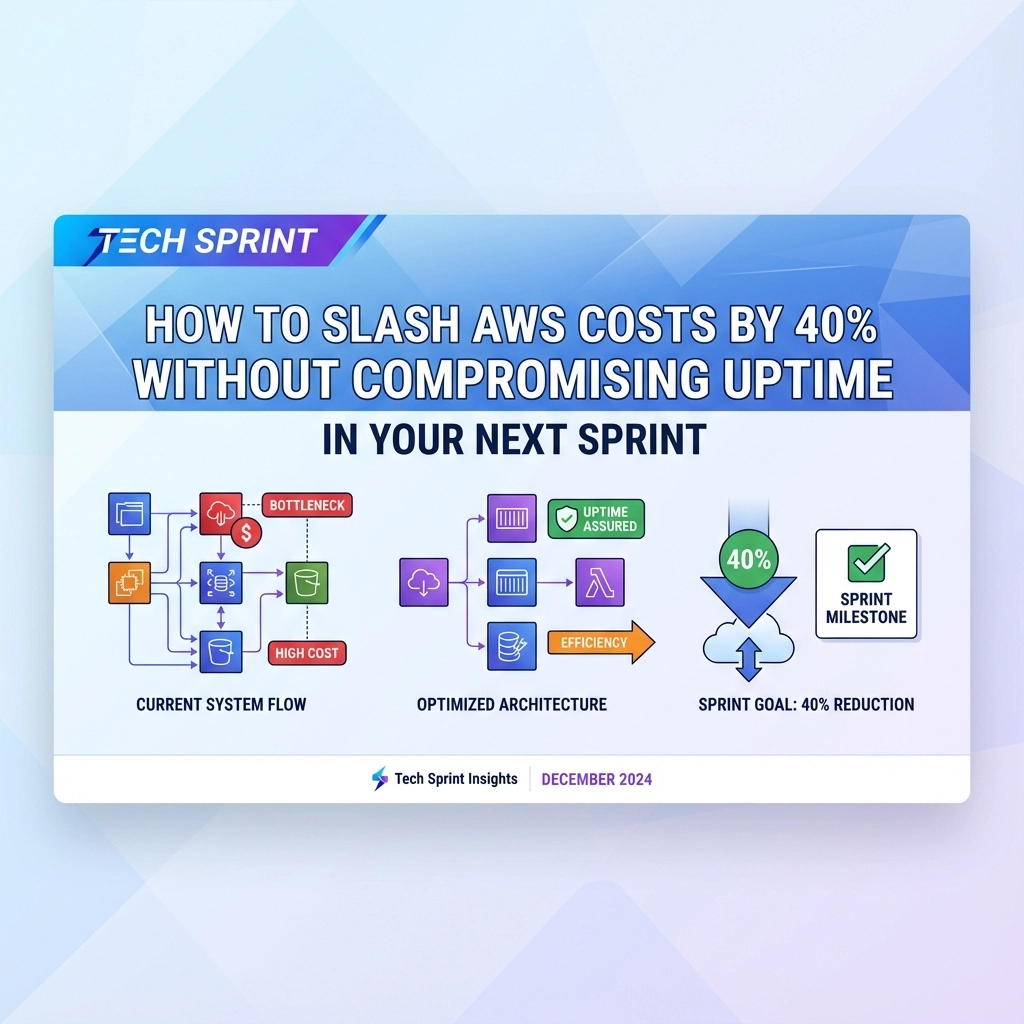
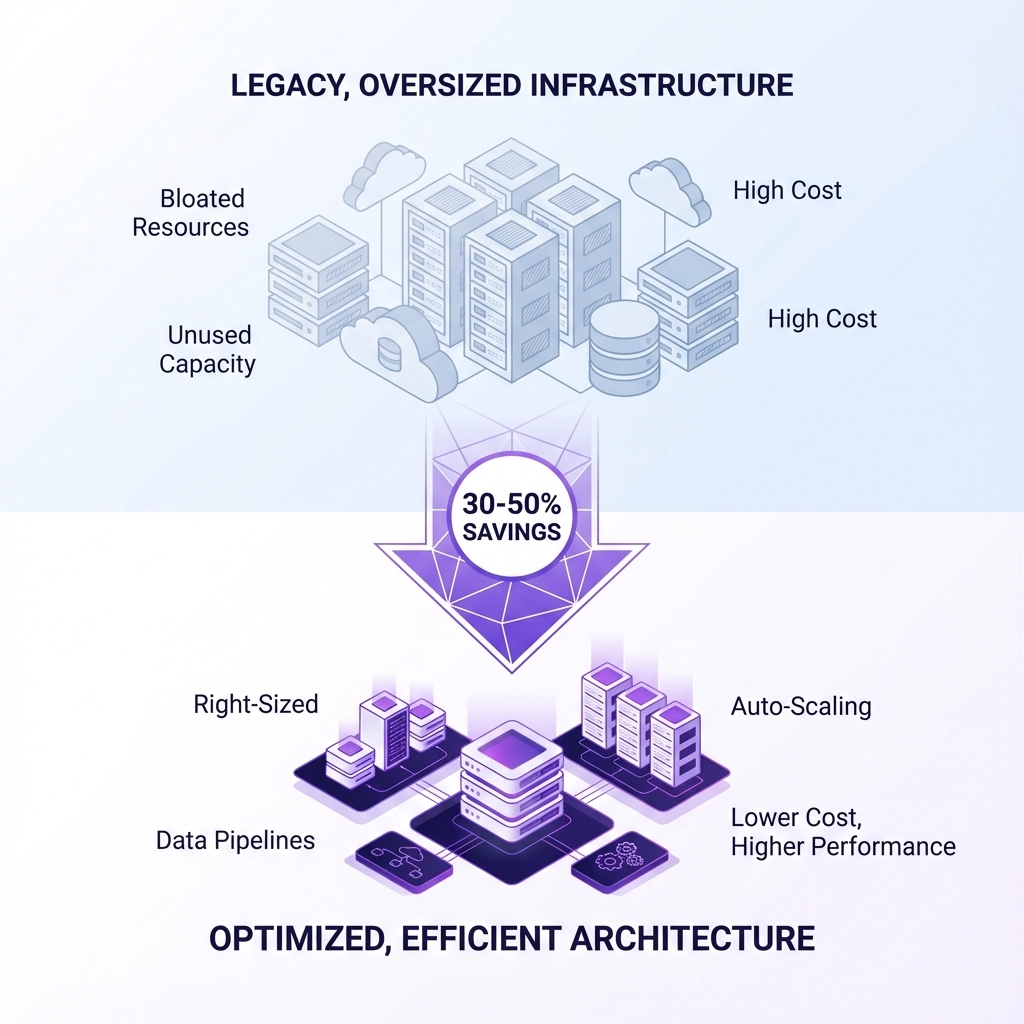
Technical Pivot #5: Infrastructure Cost Optimization
Your “quick and easy” cloud setup becomes a budget nightmare at scale.
I’ve seen startups with $50K monthly AWS bills serving 10,000 users. The problem isn’t usage: it’s architecture designed for convenience, not efficiency.
Scale-Up Cost Optimization Wins:
- Reserved instances vs. on-demand pricing – 40-60% immediate cost reduction
- Right-sizing compute resources – Most startups over-provision by 200-300%
- Implementing proper caching layers – Redis, Memcached, or CloudFront can eliminate 70% of database hits
- Storage tier optimization – Move inactive data to cheaper storage automatically
Real Numbers from The Dev Tutor Client Projects:
- Average infrastructure cost reduction: 47%
- Performance improvement: 220% faster response times
- Uptime improvement: 99.2% to 99.8%
The key is proactive optimization before you’re bleeding cash, not reactive cost-cutting during fundraising pressure.
The Hidden Timeline: When These Pivots Actually Happen
Most technical content discusses what to change, not when. Here’s the brutal timeline reality:
Months 0-18: Your startup architecture works perfectly
Months 18-24: Performance issues emerge but seem manageable
Months 24-30: Architecture limitations become business constraints
Months 30-36: Technical debt forces complete system overhauls
The survival window is months 18-30. Start architectural pivots during the “seems manageable” phase, not during the “business constraint” crisis.

Why Most Scale-Up Technical Pivots Fail
After consulting with 200+ growth-stage companies, I’ve identified the three pivot failure patterns:
1. The Perfection Trap
Teams try to build the “perfect” scalable architecture instead of iteratively improving existing systems. Perfect is the enemy of shipped.
2. The All-at-Once Approach
Attempting all five technical pivots simultaneously overwhelms development resources and introduces systematic risk.
3. The Business-Last Mentality
Technical teams focus on elegant solutions instead of business-critical improvements. Scale-up architecture must serve growth metrics, not engineering aesthetics.
The 90-Day Technical Pivot Framework
Here’s the systematic approach that works:
Days 1-30: Assessment and Planning
- Comprehensive system architecture audit
- Performance baseline establishment
- Risk prioritization matrix creation
- Resource allocation planning
Days 31-60: High-Impact Implementation
- Database optimization and read replica setup
- Monitoring infrastructure deployment
- Security audit and immediate fixes
- Cost optimization quick wins
Days 61-90: Strategic Architecture Changes
- Service extraction planning and implementation
- Advanced monitoring and alerting setup
- Compliance framework establishment
- Team process documentation
This framework has guided successful technical pivots for companies processing $10M+ in annual transactions.
Getting Expert Help with Your Technical Pivot
Most founders attempt these pivots with internal resources and timelines that guarantee failure. Technical pivots require specialized expertise and dedicated focus that most growth-stage teams lack.
If you’re facing the 18-30 month technical pivot window, the cost of expert consultation is insignificant compared to the business impact of failed architectural decisions.
Need a comprehensive technical assessment for your scale-up? Tech Sprint by The Dev Tutor provides systematic architecture audits and implementation support for growth-stage companies.
Quick wins available this week:
- 7-day comprehensive technical audit
- Performance bottleneck identification
- Cost optimization recommendations
- Security vulnerability assessment
The difference between companies that successfully scale and those that plateau isn’t market opportunity: it’s technical architecture that can handle growth velocity.
Your competition is making these pivots right now. The question isn’t whether you’ll need to pivot your technical architecture. The question is whether you’ll start before or after your current system becomes a business liability.
Ready to assess your technical pivot readiness? The evaluation takes 48 hours, and the insights can save months of development time and hundreds of thousands in infrastructure costs.
Want to dive deeper into specific technical challenges? Check out our related posts on API performance optimization, database migration strategies, microservices architecture planning, security compliance frameworks, and infrastructure cost management.