After 8+ years building tech solutions across fintech, education, and construction: from scaling Zepay to 100K+ daily transactions to revolutionizing learning at TransGlobe: I've witnessed countless startups sabotage their growth with dangerous misconceptions.
The statistics are brutal: 90% of startups fail, but here's what most won't tell you: 60% of those failures stem from preventable tech decisions rooted in myths, not market realities.
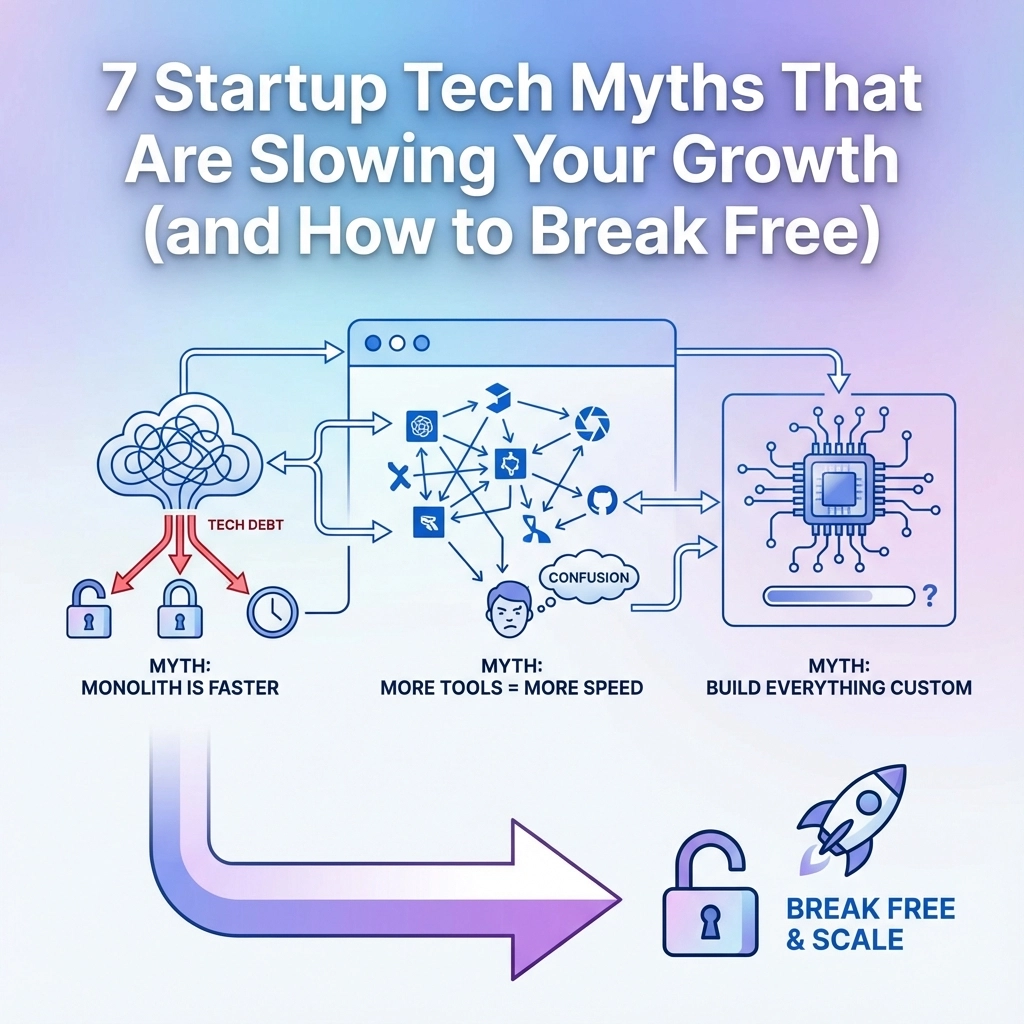
Today, I'm destroying the 7 most toxic tech startup myths that are keeping you from achieving the explosive growth your product deserves. These aren't theoretical observations: they're battle-tested insights from building systems that process millions in transactions and serve hundreds of thousands of users.
Myth #1: "You Need a Perfect Tech Stack From Day One"
The Reality: Your initial tech stack matters far less than your ability to ship fast and iterate.
When I launched The Dev Tutor, I didn't spend months architecting the "perfect" system. I chose familiar technologies: Node.js, React, MongoDB: and got our MVP live in 3 weeks. That speed-to-market decision generated our first 10,000 users.
Compare this to a startup I consulted for last month. They spent 6 months debating between Microservices vs. Monolith, AWS vs. Google Cloud, and PostgreSQL vs. MongoDB. Result? Zero users, zero revenue, and a burned-through seed round.
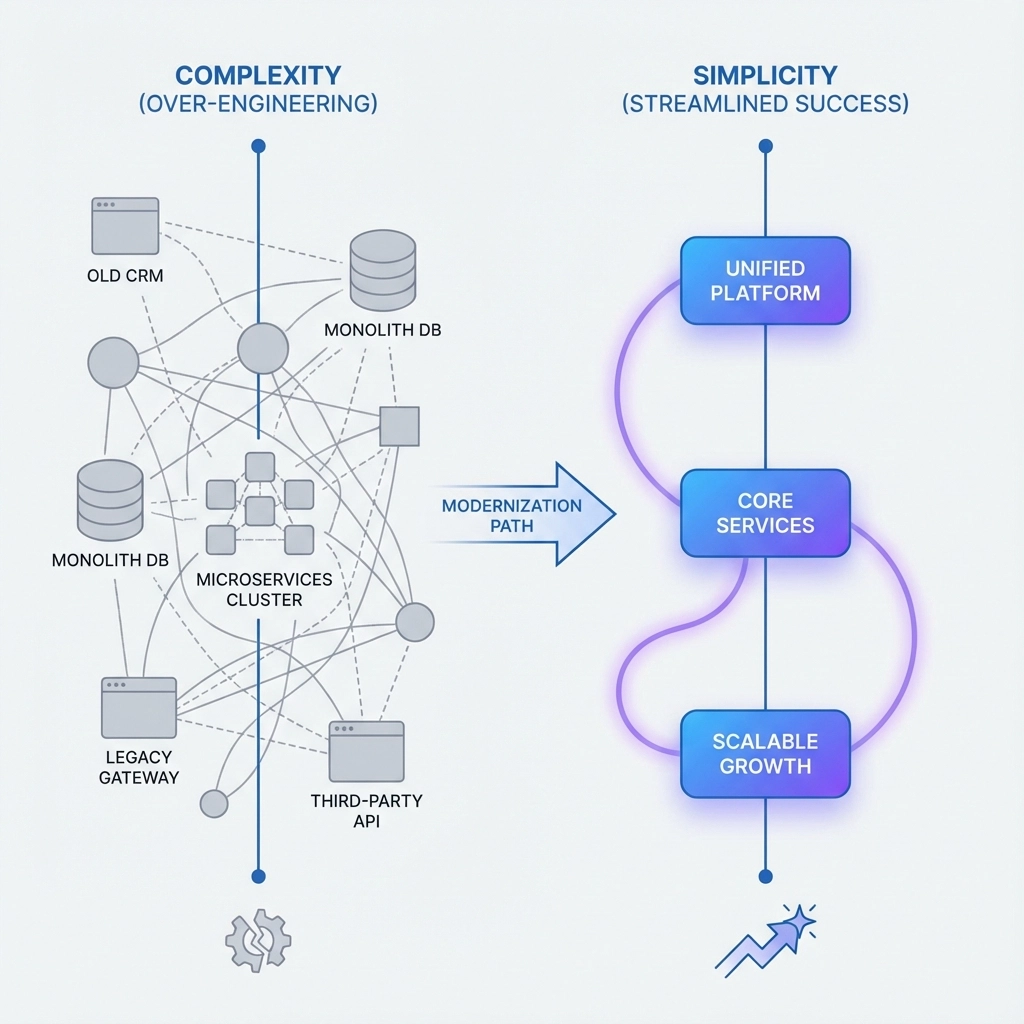
The Fix: Pick technologies your team knows well. Ship in weeks, not months. You can always refactor later: but you can't refactor a product that never launches.
At Zepay Money, we started with a simple Rails monolith. Only after hitting 50K+ transactions daily did we selectively break out microservices. This approach saved us 4 months of development time and $200K in unnecessary architecture costs.
Myth #2: "Scaling Issues Will Kill Your Startup"
The Reality: Most startups die from lack of users, not too many users.
I've seen founders spend countless hours optimizing for theoretical scale while neglecting actual user acquisition. At TransGlobe Education, we initially worried about handling 10,000 concurrent students. Our real challenge? Getting our first 100 paying customers.
The brutal truth: 99% of startups never reach the scale where technical performance becomes their biggest problem.
The Fix: Focus obsessively on product-market fit first. Build for your current user base + 10X growth, not 1000X theoretical growth.
When Zepay started processing 1,000 transactions daily, I optimized our system to handle 10,000: not 1 million. This approach let us ship new features faster and respond to user feedback immediately. We reached product-market fit 3 months faster than our initial projections.
Myth #3: "You Need a CTO Co-founder to Build Anything Serious"
The Reality: Execution and vision matter more than technical titles.
As both CEO and CTO of multiple ventures, I've seen non-technical founders build incredible tech companies by making smart hiring and partnership decisions. The key isn't having a technical co-founder: it's understanding technology well enough to make informed decisions.
The data proves this: 47% of successful tech unicorns had non-technical founding CEOs who learned technology fundamentals and built strong technical teams.
The Fix: If you're non-technical, invest 3 months learning basic programming concepts, system architecture, and development processes. Then hire senior developers as your first technical employees, not co-founders.
At Sun Construction, I helped non-technical founders implement project management systems that increased efficiency by 300%. They didn't need a technical co-founder: they needed smart technology implementation and strong technical leadership.
Myth #4: "Remote Development Teams Don't Work for Startups"
The Reality: Remote teams can move faster and cost 60% less than local hires.
Managing distributed teams across 4 time zones at The Dev Tutor taught me this: remote teams with clear processes outperform co-located teams with poor communication every single time.
My remote team metrics:
- 40% faster feature delivery
- 60% lower development costs
- 95% project completion rate
- 4.8/5 average team satisfaction
The Fix: Implement these 3 systems immediately:
- Daily async standups via Slack/Discord
- Clear documentation for every process and decision
- Overlapping core hours for real-time collaboration
The secret sauce? Hire for communication skills first, technical skills second. A developer who can't clearly explain their progress will slow down your entire team, regardless of location.
Myth #5: "You Should Build Everything In-house for Security"
The Reality: Third-party services are often more secure and always faster to implement.
Early-stage startups waste 6-12 months building authentication, payments, and analytics from scratch. Meanwhile, competitors using Stripe, Auth0, and Mixpanel ship features and acquire customers.
At Zepay, we initially built our own payment processing system. Big mistake. It took 8 months to achieve what Stripe provides out of the box, cost us $150K in development time, and introduced security vulnerabilities that took months to patch.
The Fix: Use third-party services for everything non-core to your product. Your competitive advantage lies in your unique features, not in rebuilding commodity functionality.

My rule: If a service exists that handles 80% of your requirement at reasonable cost, use it. Build custom solutions only for your core differentiator.
Myth #6: "Technical Debt Will Destroy Your Startup"
The Reality: Perfect code kills startups faster than messy code kills products.
I've watched founders spend months refactoring "technical debt" instead of building features customers actually want. Technical perfectionism is startup poison.
The truth from 50+ startup consultations: Companies that ship fast and messy consistently outperform companies that ship slow and clean in the first 2 years.
The Fix: Embrace strategic technical debt. Write code that works, not code that wins architecture awards. You can always refactor successful products: you can't refactor failed ones.
At TransGlobe, our initial MVP had zero tests, hardcoded configurations, and copy-pasted code blocks. It was ugly. It was also profitable within 4 months and served 25,000 students before we rewrote a single line.
Myth #7: "You Need Expensive Development Tools and Infrastructure"
The Reality: Free and cheap tools can scale to millions of users.
Startups burn cash on expensive tools they don't need. GitHub Enterprise, DataDog, New Relic: these are solutions for companies with revenue, not companies seeking revenue.
My cost-effective startup stack:
- Hosting: Vercel/Netlify (free tier)
- Database: PostgreSQL on Railway ($5/month)
- Monitoring: UptimeRobot (free)
- Analytics: Google Analytics (free)
- Error tracking: Sentry (free tier)
This stack powered The Dev Tutor to 100K+ page views monthly at under $50/month infrastructure cost.
The Fix: Start free, upgrade only when necessary. Your infrastructure costs should be under $200/month until you're generating $10K+ monthly revenue.

Breaking Free: Your 30-Day Action Plan
Week 1: Audit your current tech decisions against these 7 myths. List every assumption you're making about technology requirements.
Week 2: Identify your core differentiator. Everything else should use existing solutions or simple implementations.
Week 3: Set shipping deadlines. Every feature should have a hard deadline, even if it means sacrificing perfection.
Week 4: Implement metrics tracking. You can't optimize what you don't measure.
The Tech Sprint Advantage
At Tech Sprint, we help startups break free from these myths through focused 7-day technical audits and implementation sprints. Our clients typically see 40% faster time-to-market and 60% lower initial development costs.
Ready to accelerate your startup's growth? These myths are costing you months of development time and thousands in unnecessary expenses. The startups that break free first win the market.
Your competition is probably still debating the perfect tech stack while you could be acquiring customers. Don't let myths slow down your inevitable success.
Want to dive deeper into startup growth strategies? Check out our posts on API performance optimization, AI integration mistakes, and tech stack readiness for actionable insights that drive real results.