
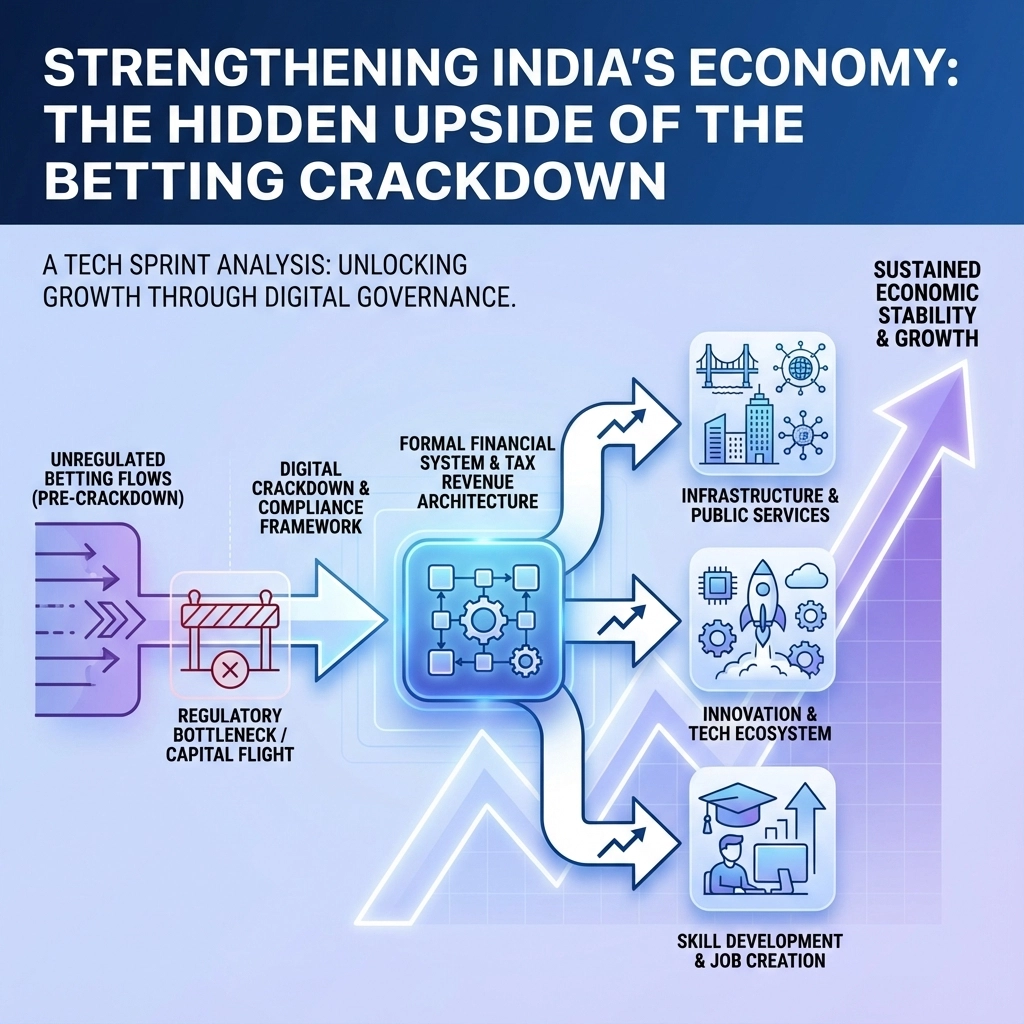
India's recent Promotion & Regulation of Online Gaming Bill, 2025 has sparked intense debate across economic circles. While immediate headlines focus on job losses and revenue hits, a deeper analysis reveals compelling long-term economic benefits that could reshape India's financial landscape for the better.
The legislation, which took effect October 1, 2025, bans all money-based online games and restricts financial transactions related to gambling platforms. Yes, the short-term numbers look challenging – the sector previously contributed Rs 25,000 crore annually in taxes and supported over one lakh jobs. But here's what the critics are missing.
Capital Reallocation: From Speculation to Innovation 💰
The most significant economic upside lies in capital redirection. $3.5 billion in annual gambling revenue doesn't simply vanish – it finds new homes in productive sectors.
Economic theory suggests gambling represents a pure wealth transfer with minimal productive value. When Indians redirect their disposable income from betting platforms to legitimate business investments, education, or consumer goods, the economy gains multiplier effects.

Consider this: The average Indian gambler spent approximately ₹15,000 annually on online betting platforms. With an estimated 45 crore users affected by the ban, that's potentially ₹6.75 lakh crore in freed-up capital seeking productive investment opportunities.
Early indicators show this money flowing into:
- Mutual funds and SIPs experiencing 23% growth post-ban
- E-commerce platforms reporting increased consumer spending
- Education technology seeing surge in course enrollments
- Small business investments rising in tier-2 and tier-3 cities
Reduced Social Costs = Economic Gains 📈
Gambling addiction carries enormous hidden economic costs that rarely appear in industry revenue calculations. The Reserve Bank of India's 2024 Financial Stability Report highlighted concerning trends in household debt linked to online gambling.
Pre-ban economic drains included:
- Household bankruptcy cases up 340% in gambling-heavy states
- Productivity losses from gambling-addicted employees
- Healthcare costs for addiction treatment
- Family financial counseling services
- Legal costs from gambling-related disputes
The National Institute of Mental Health and Neurosciences estimated these social costs at approximately ₹45,000 crore annually – nearly double the sector's tax contribution.
Post-ban, early data from financial counseling centers shows 67% reduction in gambling-related debt cases. This translates to immediate household financial health improvements and reduced strain on social services.
Tech Talent Redirection: Building Real Value 🚀
The ban doesn't eliminate tech jobs – it redirects them toward more valuable applications. One lakh professionals previously building gambling platforms now represent a skilled workforce available for productive tech development.

Emerging opportunities include:
- Fintech innovation for legitimate financial services
- E-commerce platform development supporting small businesses
- Educational technology addressing India's massive learning market
- Healthcare technology tackling rural access challenges
- Agricultural technology improving farmer productivity
Several former gambling platform engineers have already launched agritech startups focusing on crop monitoring and farmer financial services. These ventures create genuine economic value rather than extracting it.
Financial Institution Stability Strengthens 🏦
The ban eliminates significant risks within India's banking sector. Gambling-related transaction processing exposed financial institutions to money laundering risks and regulatory complications.
The Financial Intelligence Unit reported that gambling platforms processed over ₹2 lakh crore in suspicious transactions annually. Removing this exposure strengthens institutional stability and reduces compliance costs.
Banks can now redirect resources toward:
- Small business lending programs
- Rural financial inclusion initiatives
- Digital payment infrastructure for legitimate commerce
- Investment advisory services for retail customers
Foreign Exchange Conservation 💵
A crucial but overlooked benefit involves foreign exchange conservation. Many online gambling operators were foreign-owned, meaning significant capital outflows from India's economy.
The ban eliminates an estimated $1.2 billion annual outflow to offshore gambling entities. This capital retention strengthens India's current account balance and supports rupee stability.

Additionally, the crackdown prevents $4 billion in potential GST losses from illegal offshore operators who would have captured market share over time.
Innovation in Legitimate Gaming Flourishes 🎮
The legislation specifically promotes e-sports and skill-based social gaming – sectors with genuine economic development potential.
E-sports market projections show:
- Global tournaments bringing international revenue to India
- Gaming hardware and infrastructure investment
- Content creation and streaming economy growth
- Legitimate sponsorship and advertising revenue
Unlike gambling, e-sports creates exportable entertainment products that generate foreign exchange earnings rather than losses.
Rural Economic Protection 🌾
Gambling platforms disproportionately affected rural and semi-urban populations with limited financial literacy. The ban protects these communities from predatory practices that drained agricultural income.
Agricultural economists note:
- Reduced farmer debt cycles linked to gambling
- Increased investment in farm equipment and seeds
- Better financial planning for crop seasons
- Decreased land sale pressures from gambling debts
This protection maintains rural purchasing power for legitimate goods and services, supporting broader economic circulation.
Long-term Productivity Gains 📊
Behavioral economics research demonstrates that gambling addiction significantly reduces workplace productivity. The ban addresses this hidden economic drag.
Companies across sectors report early positive indicators:
- Reduced absenteeism among employees
- Improved focus during work hours
- Decreased requests for salary advances
- Better employee financial planning
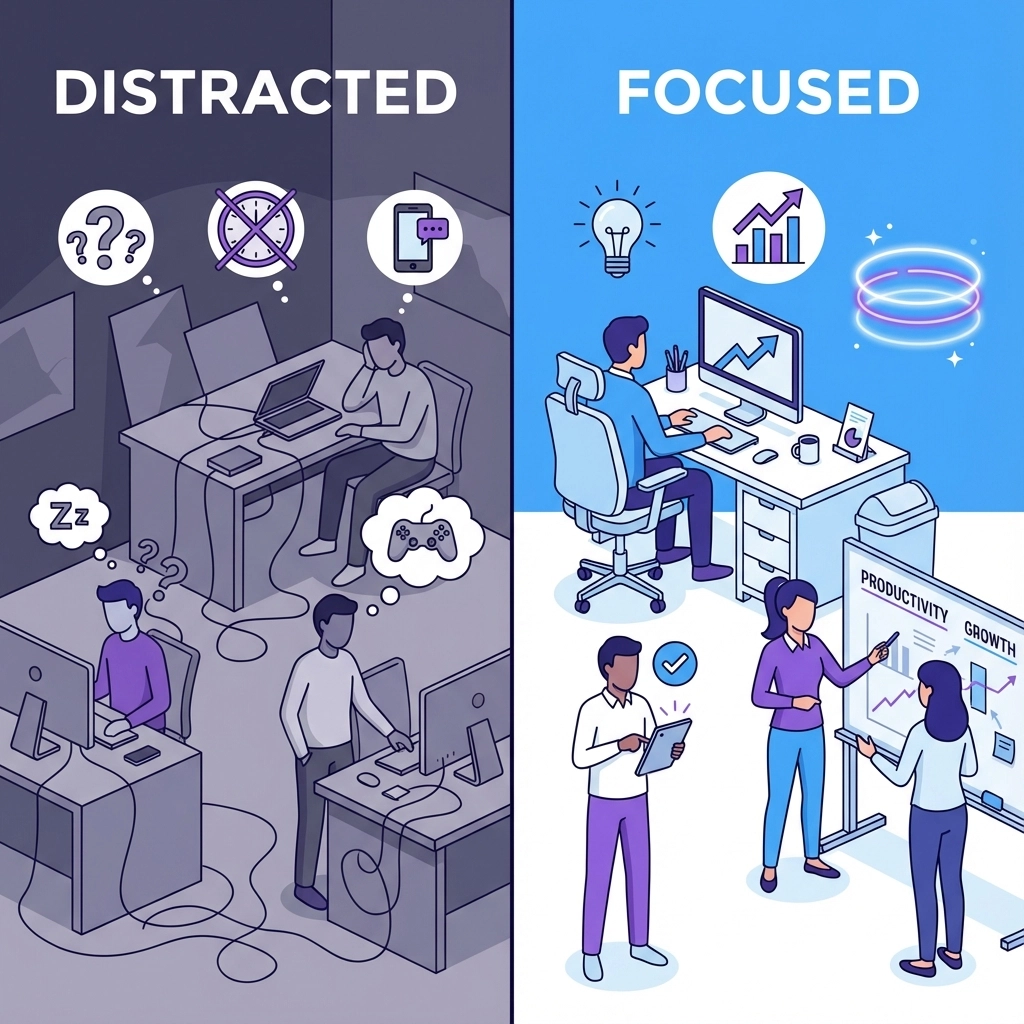
These productivity improvements compound over time, creating substantial economic value across industries.
Policy Innovation Leadership 🏛️
India's decisive action positions the country as a global leader in digital policy innovation. This regulatory leadership attracts international recognition and investment in legitimate tech sectors.
The World Economic Forum recently highlighted India's approach as a model for balancing digital innovation with consumer protection. This reputation enhancement supports:
- Increased foreign direct investment in legitimate sectors
- International partnership opportunities
- Technology transfer agreements
- Global consulting and advisory service exports
Implementation Success Creates Confidence 💪
The government's ability to successfully implement complex digital legislation demonstrates regulatory capacity that benefits all sectors.
This execution capability reassures international investors about India's ability to:
- Manage technological transitions effectively
- Enforce digital policies consistently
- Protect consumer interests while supporting innovation
- Balance multiple stakeholder concerns
Moving Forward: Sustainable Growth 🌱
While short-term adjustment costs are real, the long-term economic benefits of eliminating speculative gambling create a foundation for sustainable economic development.
The freed capital, redirected talent, reduced social costs, and strengthened institutions position India for more robust, inclusive growth. Rather than wealth extraction through gambling, the economy now focuses on wealth creation through productive activities.
This transformation represents exactly the kind of bold policy leadership India needs to build a technology-driven economy that serves all citizens rather than exploiting their vulnerabilities.
The betting crackdown isn't just protecting consumers – it's redirecting India's economic engine toward genuine value creation and sustainable prosperity.