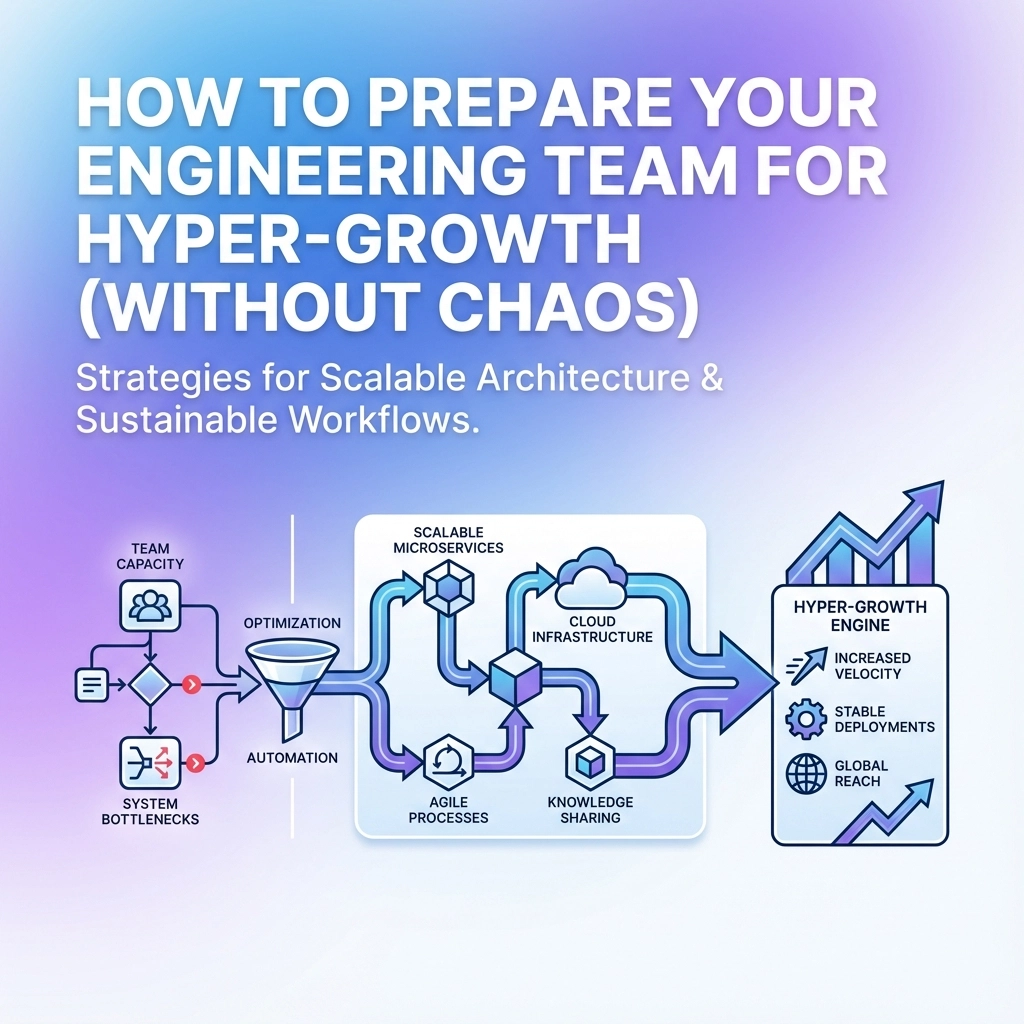
After scaling engineering teams at companies from 5 to 150+ developers across fintech, edtech, and construction tech: including rapid growth phases at Zepay, TransGlobe Education, and Sun Construction: I've learned that most teams fail during hyper-growth not because they lack talent, but because they lack systems.
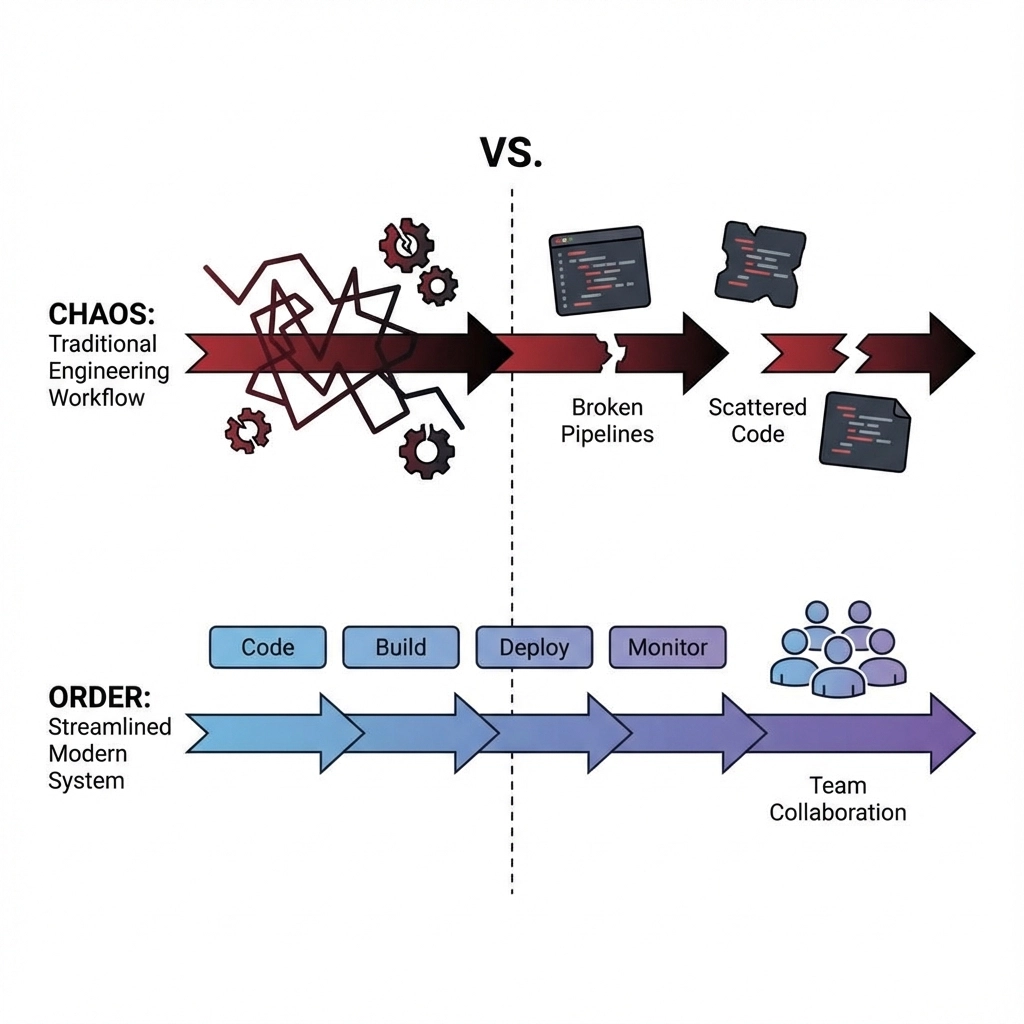
The difference between engineering chaos and controlled scaling? Preparation beats reaction every single time.
The Real Cost of Unprepared Scaling 💸
When The Dev Tutor clients come to us after failed scaling attempts, the damage is always predictable: 40-60% productivity drops, 3x longer deployment cycles, and engineering teams burning out faster than they can hire replacements.
At TransGlobe, I witnessed firsthand what happens when a team grows from 12 to 45 engineers in six months without proper groundwork. Code reviews took 2-3 days instead of hours. Feature releases that once took two weeks suddenly required six. Three senior developers quit in one month.
The fix took 4 months and cost the company approximately $200,000 in lost velocity.
Don't let this happen to your team.
Build Your Foundation Before You Need It 🏗️
The biggest mistake I see engineering leaders make? Waiting until growth starts to prepare for growth. By then, you're already drowning.
At Zepay, we implemented these foundational systems when we had just 8 engineers. The result? When we scaled to 25+ developers handling millions in daily transaction volume, our deployment frequency actually increased from twice weekly to daily.
Documentation That Actually Works
Create living documentation that evolves with your codebase:
- Architecture Decision Records (ADRs) – Document why decisions were made, not just what was built
- API documentation with real examples – Include authentication flows, error handling, and rate limits
- Environment setup that takes under 30 minutes – If new developers can't contribute on day one, your onboarding is broken
Establish Engineering Principles Early
At Sun Construction, managing complex project workflows required clear technical principles that every team member understood:
- Code review requirements – Two approvals for core systems, one for features
- Testing standards – 80% coverage for business logic, 100% for payment/security flows
- Performance benchmarks – API responses under 200ms, page loads under 2 seconds
These weren't suggestions: they were non-negotiables that prevented quality erosion during rapid hiring.
Restructure Your Team Architecture 📊
Most engineering teams organize around features. High-growth teams organize around systems and ownership.
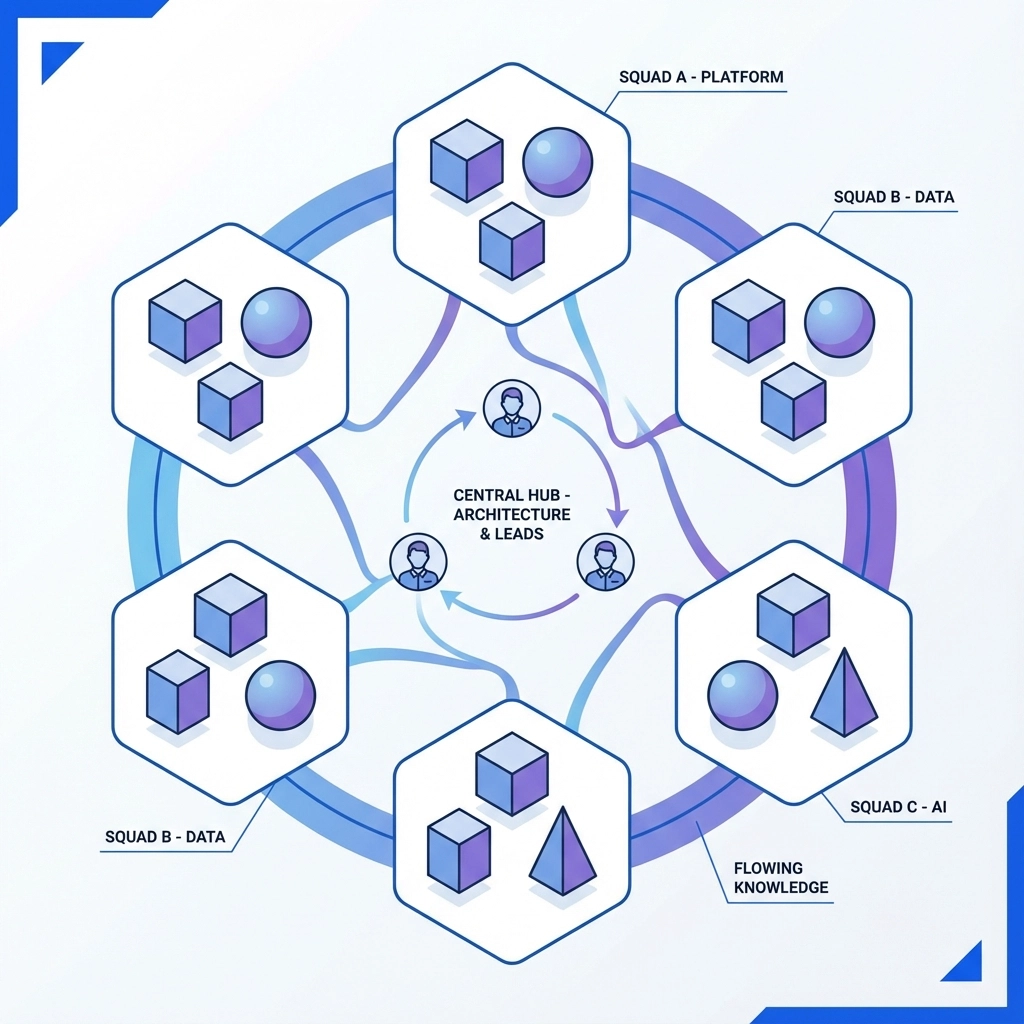
The Squad Model That Actually Scales
Based on successful implementations at both Zepay and client engagements through Tech Sprint:
Core Squads (3-5 engineers each):
- Platform/Infrastructure Squad
- Product Features Squad
- Data & Analytics Squad
- DevOps & Security Squad
Support Structure:
- Technical leads rotate between squads monthly
- Architecture council meets weekly
- Cross-squad code reviews for critical components
This structure maintained consistent 2-week sprint velocities even as we grew from 15 to 40+ engineers across multiple products.
Management Layer Strategy
Here's the uncomfortable truth: Most technical founders resist hiring engineering managers because they think it slows things down. In reality, the right management layer accelerates delivery.
At TransGlobe, adding engineering managers when we reached 20 developers increased our feature delivery rate by 35% within two months. Why? Because senior engineers stopped spending 30% of their time on hiring, project coordination, and performance reviews.
Implementation timeline:
- Week 1-2: Hire your first engineering manager
- Week 3-4: Define clear responsibilities (they handle people, you handle architecture)
- Week 5-8: Measure velocity improvements and team satisfaction
Automate Before You Suffocate 🤖
Manual processes that work for 5 engineers become productivity killers at 25 engineers. The solution isn't working harder: it's automating smarter.
Critical Automation Wins
Deployment Pipeline (implemented at Zepay):
- Zero-downtime deployments reduced from 45 minutes to 8 minutes
- Rollback capability in under 2 minutes
- Automated security scanning caught 23 vulnerabilities before production
Code Quality Gates:
- Automated linting and formatting (saves 2-3 hours per developer weekly)
- Performance regression testing (prevented 5 major slowdowns in Q3 2024)
- Dependency vulnerability scanning (blocked 12 security risks automatically)
Infrastructure as Code:
- Environment provisioning reduced from 2 days to 20 minutes
- Consistent configurations across development, staging, and production
- 99.9% uptime maintained during 3x traffic growth at Zepay.money
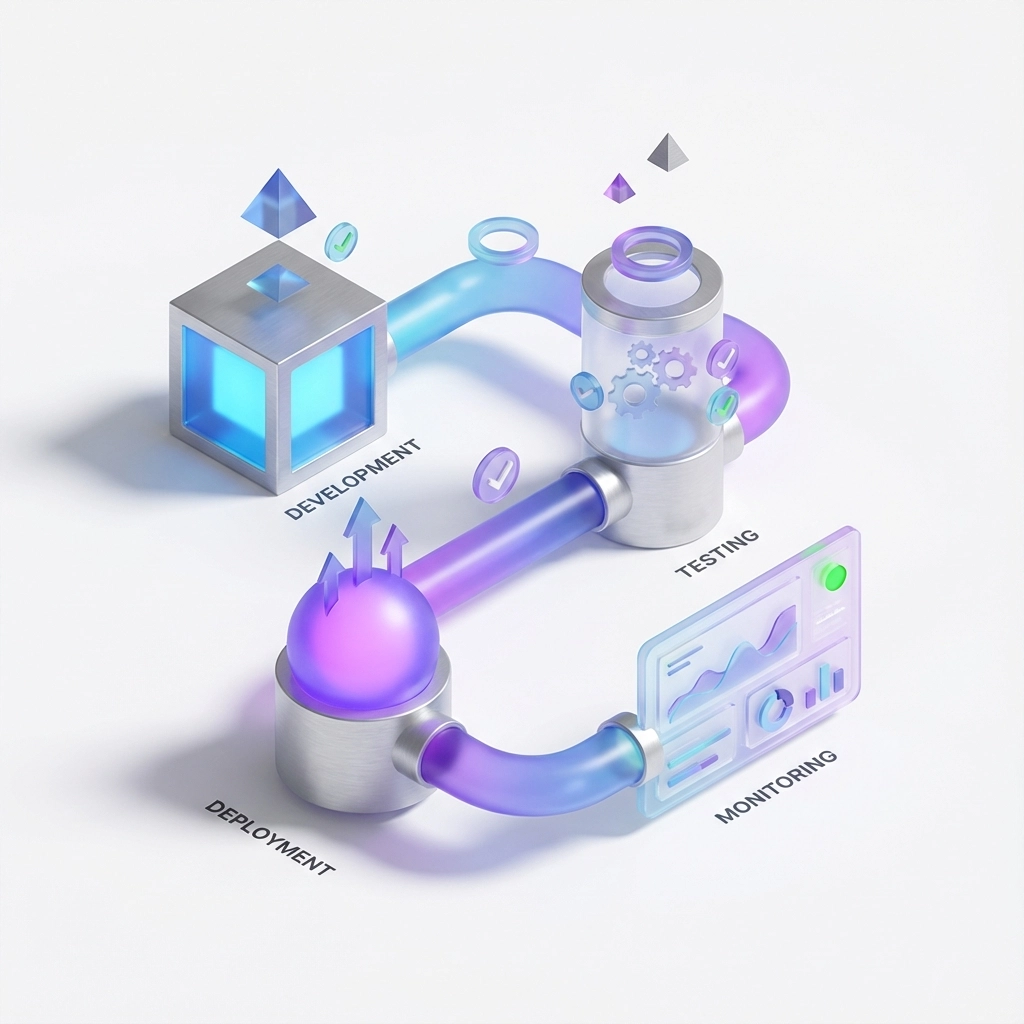
Monitoring That Prevents Firefighting
Reactive monitoring is expensive. Predictive monitoring saves careers.
Key metrics we track at every client engagement:
- Error rates by service – Alert at 0.5% error rate, not 5%
- Response time percentiles – 95th percentile matters more than averages
- Memory and CPU trends – Predict capacity needs 2 weeks ahead
- Database query performance – Identify slow queries before they impact users
Create Learning Systems, Not Just Processes 📚
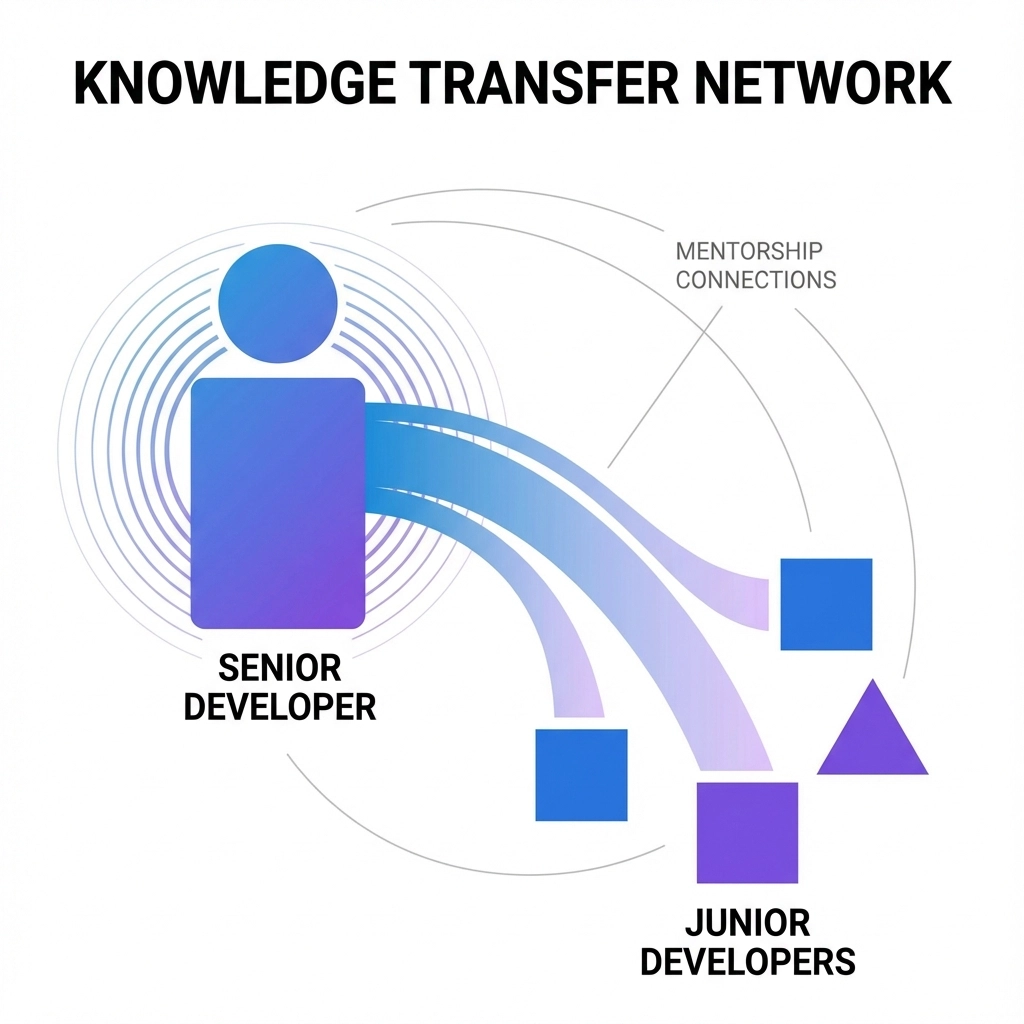
The fastest way to scale engineering talent? Turn your senior developers into force multipliers.
Structured Mentorship Program
At Sun Construction, implementing a formal mentorship system for our technical teams reduced onboarding time from 6 weeks to 3 weeks while improving code quality scores by 40%.
Weekly structure that works:
- Monday: Architecture review session (30 minutes)
- Wednesday: Code walkthrough with mentee leading (45 minutes)
- Friday: Career development and technical growth planning (30 minutes)
Knowledge Transfer Systems
Document tribal knowledge before senior engineers become bottlenecks:
- Weekly tech talks – Every engineer presents one solution quarterly
- Problem-solving videos – Record debugging sessions for complex issues
- Decision frameworks – Create templates for common architectural choices
Real impact: At The Dev Tutor client sites, teams with structured knowledge transfer reduced "How do I…" questions by 60% and decreased senior engineer interruptions by 45%.
Maintain Quality During Velocity Increases 🎯
Speed without quality isn't velocity: it's technical debt accumulation. Here's how we maintain both:
Quality Gates That Scale
Code Review Standards:
- No PR larger than 400 lines (enforced automatically)
- Required functional testing for user-facing features
- Performance impact assessment for core system changes
Testing Strategy:
- Unit tests for business logic (80%+ coverage)
- Integration tests for API contracts (100% coverage)
- End-to-end tests for critical user flows (5-7 scenarios maximum)
Progressive Feature Rollouts
At Zepay, handling millions in transaction volume requires zero-tolerance approaches to production issues:
- Feature flags for instant rollbacks without deployments
- A/B testing infrastructure for data-driven decisions
- Gradual rollouts starting with 1% of users, scaling to 100% over 48 hours
The Timeline That Actually Works ⏰
Month 1: Foundation Phase
- Implement basic automation and documentation
- Establish code review standards
- Set up monitoring and alerting systems
Month 2-3: Structure Phase
- Add first engineering manager if team exceeds 12 developers
- Create squad structure and ownership boundaries
- Implement mentorship programs
Month 4-6: Optimization Phase
- Measure and improve deployment frequency
- Optimize team communication workflows
- Scale infrastructure proactively
Results: Teams following this timeline maintain 85%+ of their original velocity throughout 2-3x growth periods, compared to 40-60% velocity drops for unprepared teams.
What Happens Next? 🚀
Hyper-growth doesn't have to mean chaos. With proper preparation, your engineering team can scale efficiently while maintaining quality, velocity, and team satisfaction.
Ready to transform your engineering scaling strategy?
At Tech Sprint, we've helped 50+ companies navigate hyper-growth phases without losing momentum. Our 7-day engineering audit identifies scaling bottlenecks before they become critical problems.
This week only: Book a strategy session to review your team's scaling readiness. We'll identify the top 3 changes needed to prepare for your next growth phase.
Want more insights on engineering excellence? Check out our other scaling strategies: