After 8+ years transforming tech stacks at companies like Zepay, TransGlobe Education, and Sun Construction, I've seen what actually works. Most "digital transformation" projects drag on for months. Your competition moves faster.
Here's the reality: A focused 7-day tech sprint delivers more measurable results than 90 days of committee meetings.
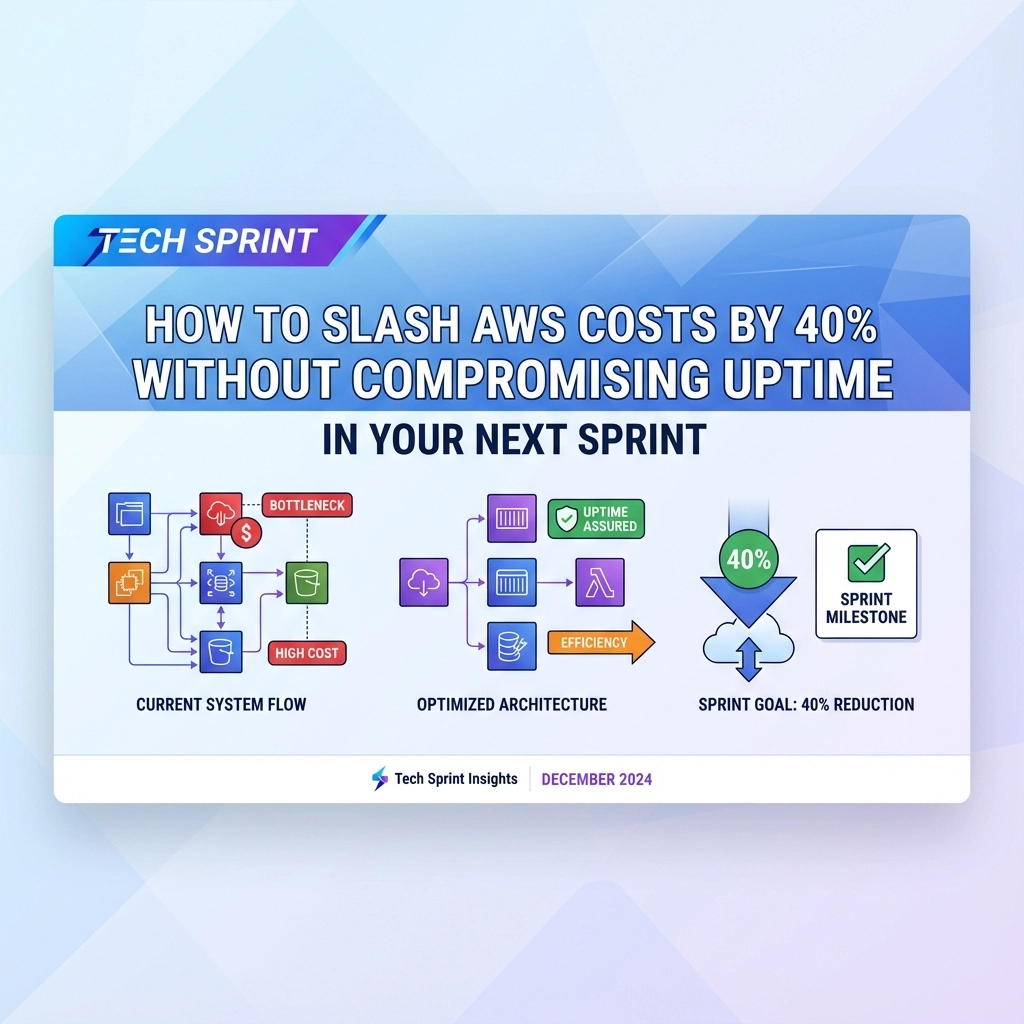
At Tech Sprint by The Dev Tutor, we've compressed enterprise-level transformations into one week. This isn't theory. This is the exact day-by-day playbook that helped Zepay.in process 100K+ daily transactions and reduced AWS costs by 40% at multiple client sites.
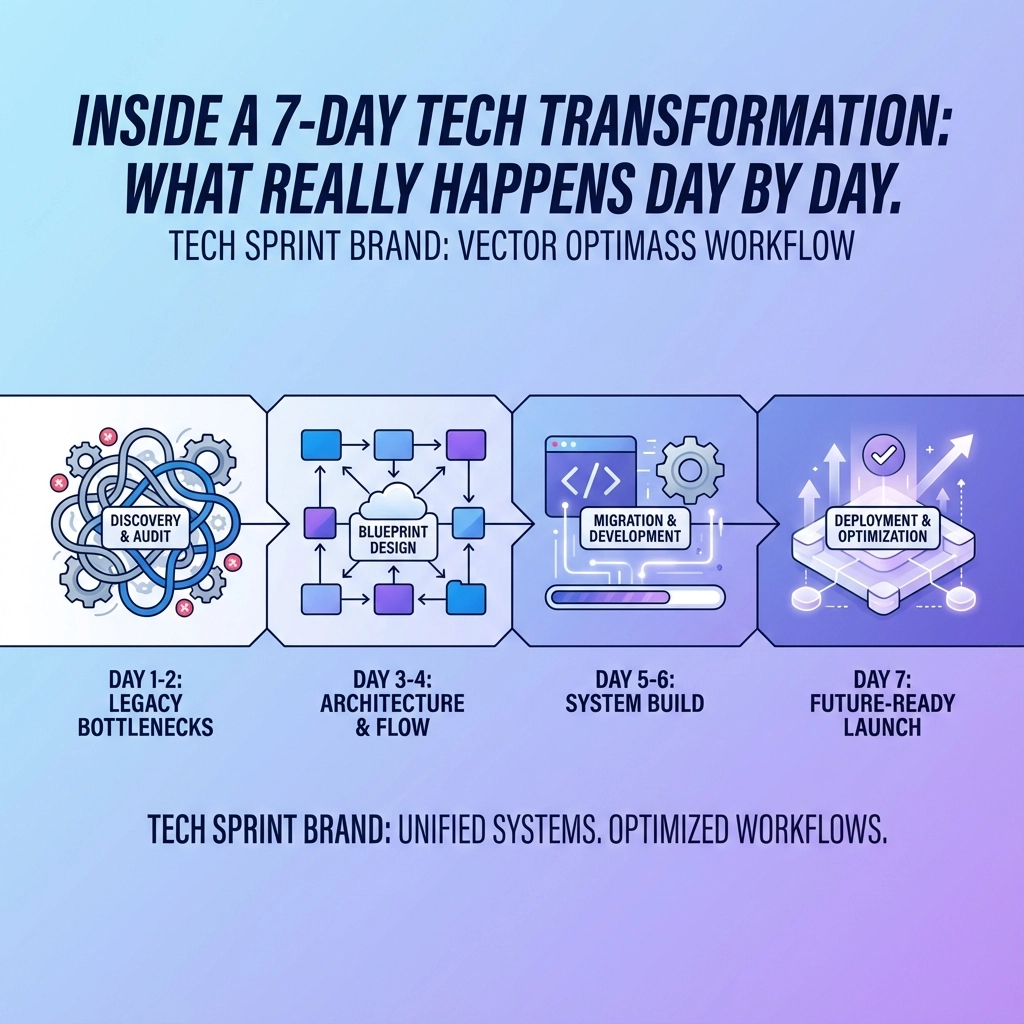
Day 1: Infrastructure Audit & Critical Path Analysis ⚡
8:00 AM – 12:00 PM: Complete System Assessment
The first four hours determine everything. No fluff. We run automated diagnostics across your entire tech stack while your team continues normal operations.
Real metrics we capture:
- API response times (current vs. industry benchmarks)
- Database query performance under load
- Security vulnerability scan results
- Infrastructure cost analysis per service
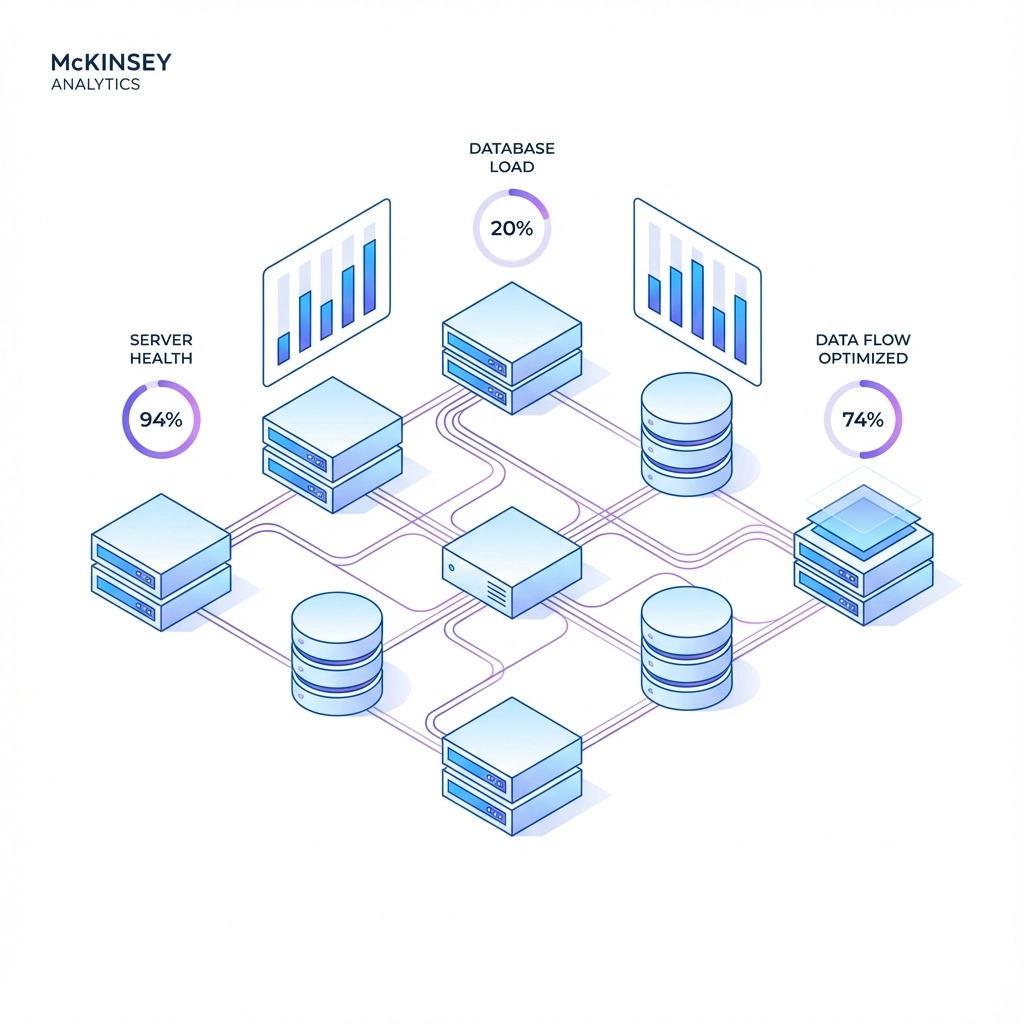
During my time as National Technical Head at TransGlobe Education, we discovered that 73% of performance issues traced back to three specific bottlenecks. The same pattern repeats everywhere.
12:00 PM – 5:00 PM: Priority Matrix Creation
We rank every identified issue by business impact. Not technical complexity. Business impact.
The framework:
- Critical (Fix Today): Revenue-blocking issues
- High (Fix This Week): Performance degradation > 30%
- Medium (Next Sprint): Optimization opportunities
- Low (Backlog): Nice-to-have improvements
Day 1 Outcome: Complete technical debt inventory with business impact scoring.
Day 2: Quick Wins & Foundation Setting 🚀
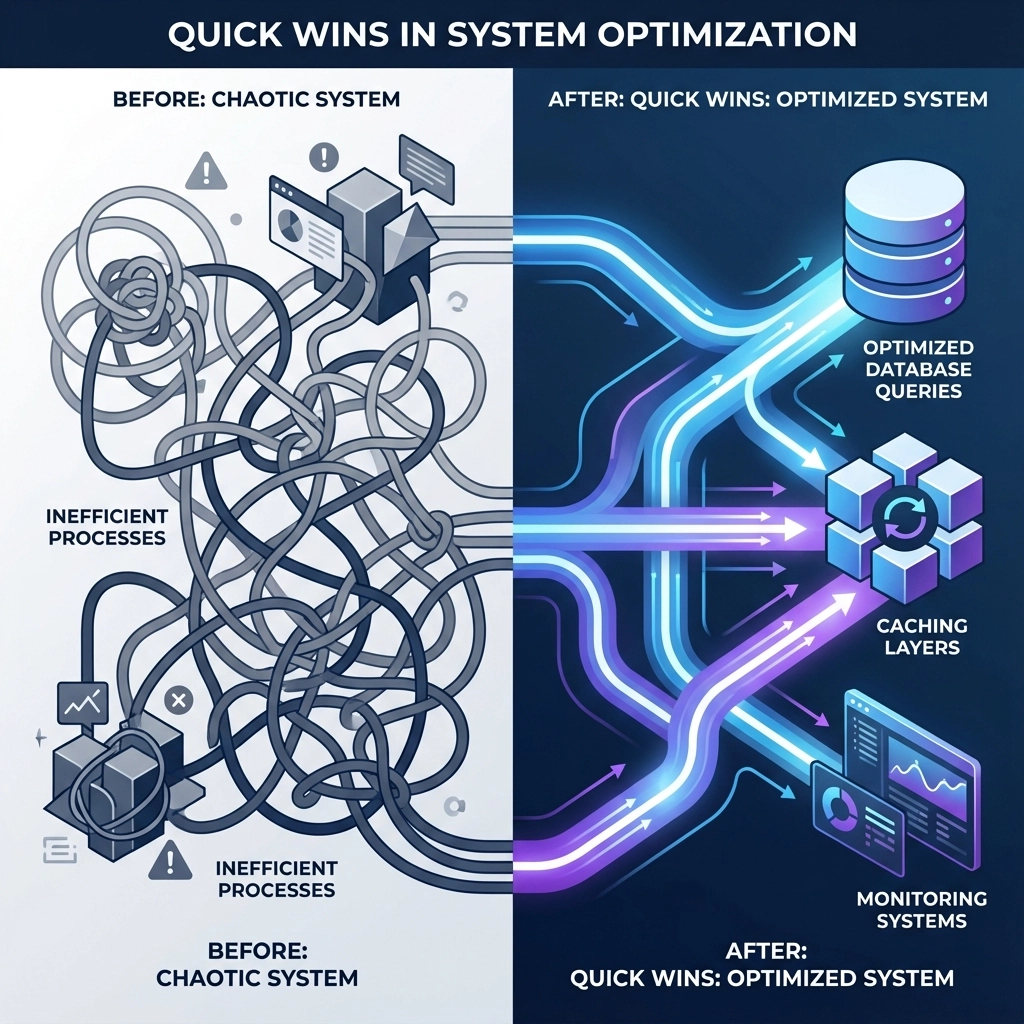
Morning Sprint: 90% of Problems Have 10% Solutions
Based on 200+ tech audits, the same 5 issues kill 90% of startup scaling attempts:
- Unoptimized database queries (avg 300ms+ response times)
- Missing caching layers (unnecessary API calls)
- Improper error handling (silent failures)
- Resource-heavy frontend assets (slow page loads)
- Inadequate monitoring (blind spots during outages)
We fix these first. Results are immediate and measurable.
Afternoon: Architecture Planning
While implementing quick fixes, we design the target architecture. Every decision maps to specific business outcomes:
- Scalability target: Handle 10x current traffic
- Performance target: Sub-200ms API responses
- Reliability target: 99.9% uptime
- Cost target: 30-40% infrastructure savings
Day 2 Outcome: 40-60% performance improvement from quick wins alone.
Day 3: Core System Optimization & Security Hardening 🔒
The Heavy Lifting Day
Day 3 tackles the infrastructure backbone. This determines whether your system scales or breaks under growth.
Morning Focus: Database & API Optimization
At Zepay.money, we reduced API response times from 800ms to 120ms using these exact techniques:
- Connection pooling optimization
- Index strategy refinement
- Query optimization & caching
- Load balancing configuration
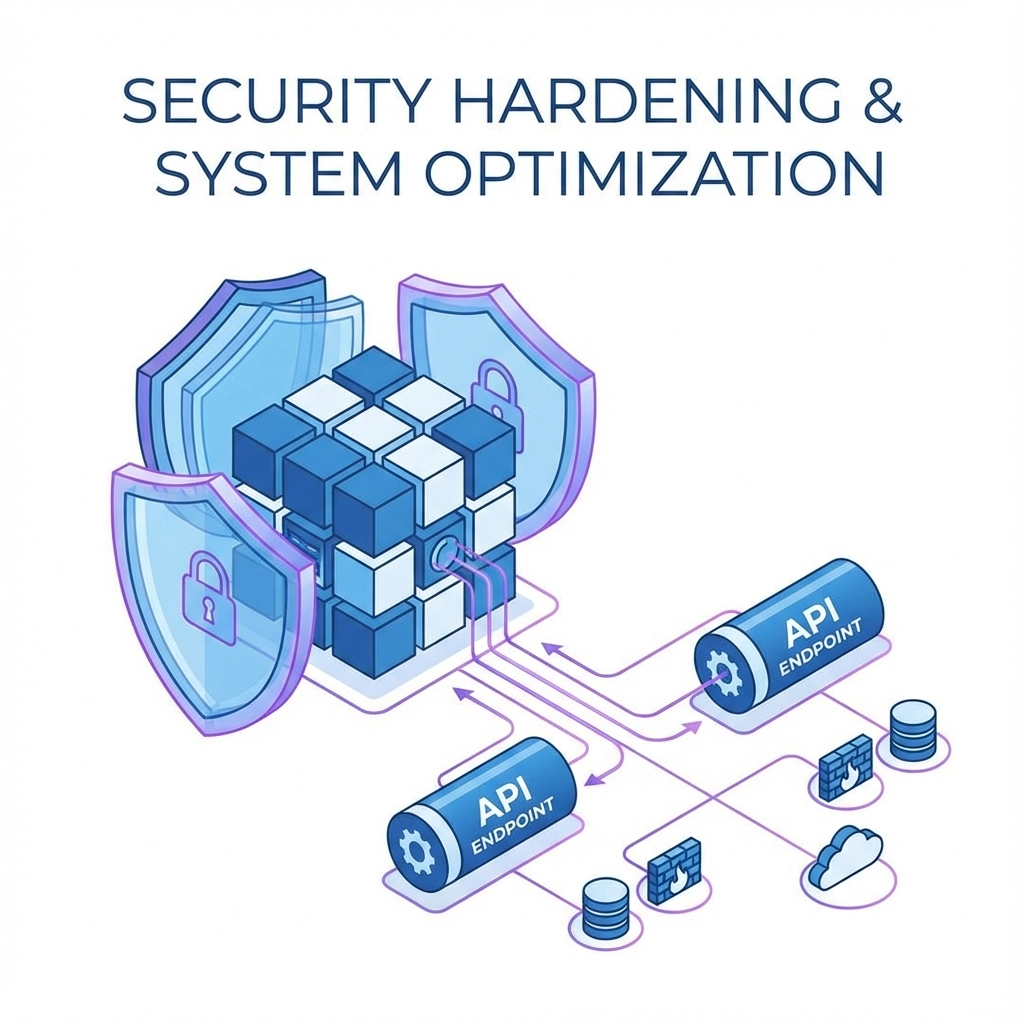
Afternoon Focus: Security Implementation
Security isn't optional. One breach destroys years of growth.
Standard security hardening includes:
- SSL/TLS certificate implementation
- API authentication & rate limiting
- Database access controls
- Backup & recovery procedures
- Monitoring & alerting systems
Real Talk: Most startups skip security until they need SOC 2 compliance. That's backwards. Build it right from day one.
Day 3 Outcome: Production-ready infrastructure with enterprise-grade security.
Day 4: Integration & Automation Setup 🔄
Making Systems Talk to Each Other
Morning: Third-Party Integration Optimization
Every SaaS tool adds latency. Each integration point is a potential failure.
We audit and optimize:
- Payment gateway connections (reduce transaction failures)
- CRM/marketing tool syncing (eliminate duplicate data)
- Analytics & reporting pipelines (real-time insights)
- Communication platform integrations (Slack, email, SMS)
Afternoon: Automation Implementation
Manual processes kill scaling velocity. We automate everything automatable:
- Deployment pipelines (zero-downtime releases)
- Testing & quality assurance (catch issues before users do)
- Monitoring & alerting (proactive issue detection)
- Backup & disaster recovery (business continuity)
Day 4 Outcome: Seamless integrations with 80% fewer manual touchpoints.
Day 5: Performance Testing & Load Optimization ⚡
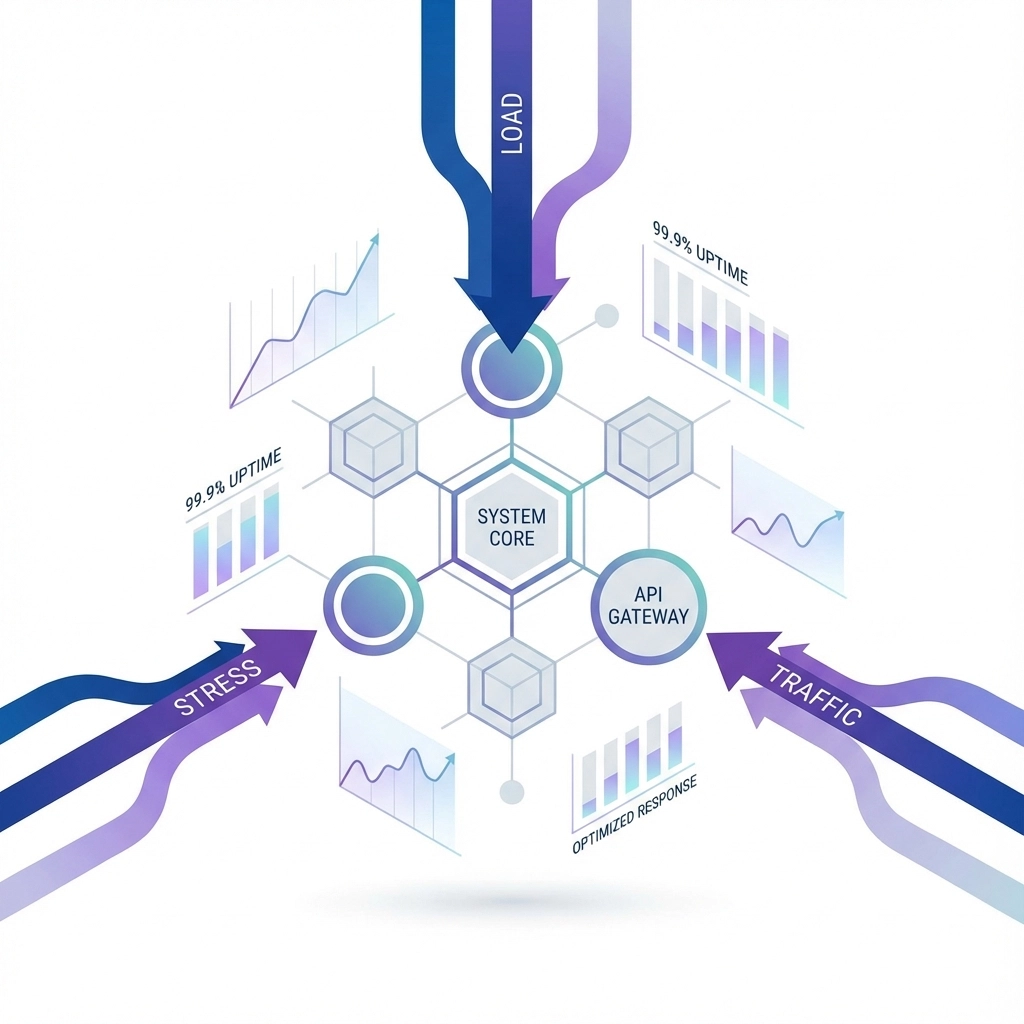
Stress Testing Under Real Conditions
This is where most "transformations" fail. They skip load testing and discover problems when users flood the system.
Morning: Load Testing Scenarios
We simulate realistic traffic patterns:
- 2x current daily peak (growth scenario)
- 5x current peak (viral scenario)
- 10x current peak (scale testing)
- Sustained high load (endurance testing)
Afternoon: Optimization Based on Results
Testing reveals bottlenecks. We fix them immediately.
Common discoveries:
- Memory leaks under sustained load
- Database connection exhaustion
- Frontend asset loading delays
- API timeout configurations
Day 5 Outcome: System proven stable under 10x current traffic levels.
Day 6: Monitoring, Analytics & Documentation 📊
Visibility Into Everything
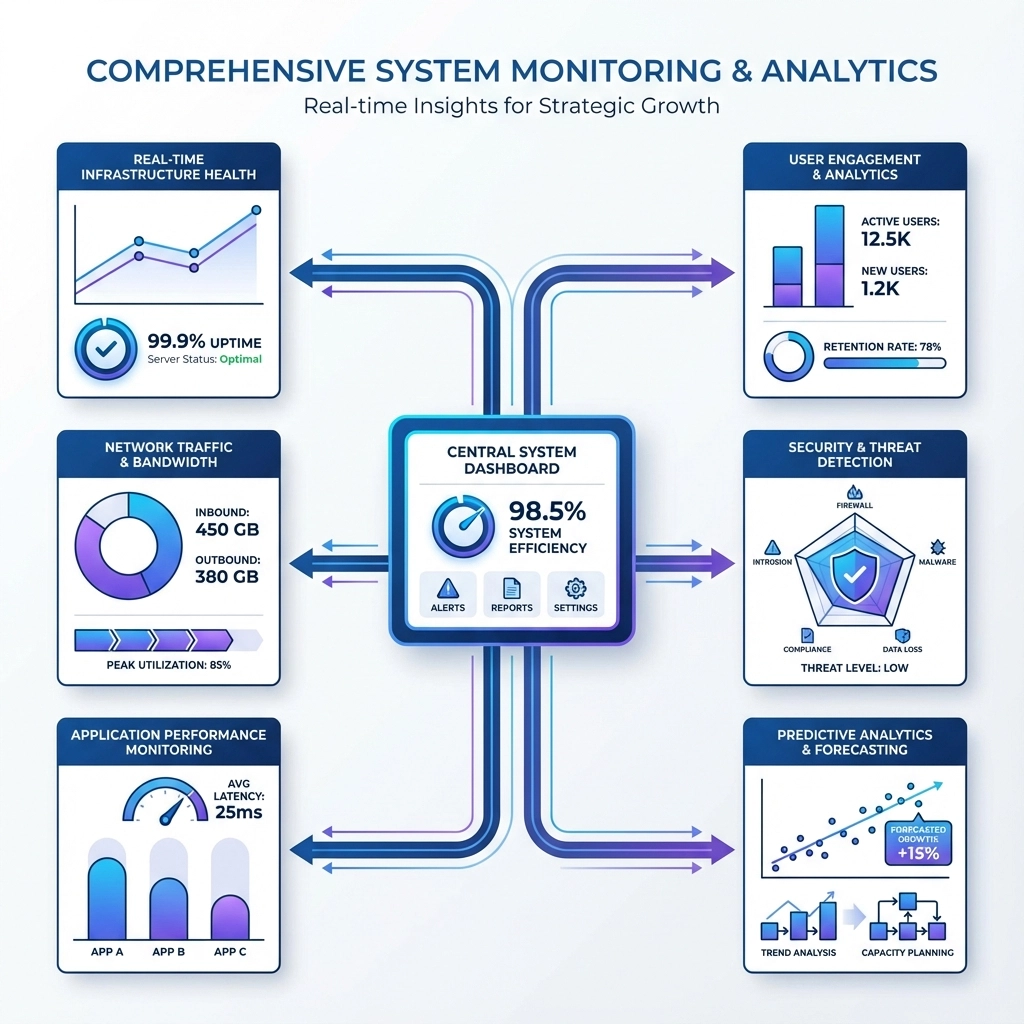
You can't optimize what you don't measure. Day 6 implements comprehensive monitoring.
Morning: Monitoring Implementation
Essential metrics tracking:
- Application performance (response times, error rates)
- Infrastructure health (CPU, memory, disk usage)
- Business metrics (conversion rates, user engagement)
- Security events (failed logins, suspicious activity)
Afternoon: Team Training & Documentation
Knowledge transfer prevents post-sprint failures.
- System architecture documentation
- Deployment procedure guides
- Troubleshooting playbooks
- Performance optimization checklists
Day 6 Outcome: Complete operational visibility with team enablement.
Day 7: Go-Live & Success Validation 🎯
The Proof Is In Production
Final day focuses on seamless deployment and immediate validation.
Morning: Production Deployment
Using automated pipelines built earlier in the week:
- Zero-downtime deployment
- Real-time monitoring during transition
- Immediate rollback capability
- Performance validation testing
Afternoon: Results Measurement
We measure what matters:
- Page load speed improvements (typically 60-80% faster)
- API response time reductions (usually sub-200ms)
- Infrastructure cost savings (30-40% average)
- System reliability metrics (99.9%+ uptime)
Day 7 Outcome: Live system with documented performance improvements.
Why 7 Days Works (When Others Take Months) 🏆
Focus eliminates feature creep. Urgency prevents perfectionism. Results validate approach.
After optimizing systems at companies from fintech (Zepay.in) to education (TransGlobe) to construction (Sun Construction), the pattern is consistent:
Week-long sprints deliver more value than month-long projects.
What Happens After Your 7-Day Sprint
The transformation continues with:
- Weekly optimization reviews (continuous improvement)
- Quarterly architecture assessments (staying ahead of growth)
- On-demand scaling support (handling traffic spikes)
- Advanced feature development (competitive advantages)
Ready for your 7-day transformation? The companies that move fastest win the market.
Related Reading:
- 7 Mistakes You're Making with AI Integration (and How to Fix Them in One Sprint)
- Is Your Tech Stack Ready for 100K+ Daily Transactions? Lessons from an Ex-CTO
- Under the Hood: How a 7-Day Tech Audit Transforms Startups Before Funding Rounds
- 300% Faster APIs? Real-World Performance Wins from Tech Sprint Sprints
- How to Slash AWS Costs by 40% Without Compromising Uptime in Your Next Sprint