
After 8+ years building tech infrastructure for companies like Zepay, The Dev Tutor, and TransGlobe Education, I've seen startups waste months on tech stack decisions that kill their runway. 73% of startups fail because they run out of cash before finding product-market fit.
The brutal truth? Your tech stack choice directly impacts your burn rate and time-to-market. Choose wrong, and you'll spend 6 months building what should take 6 weeks.
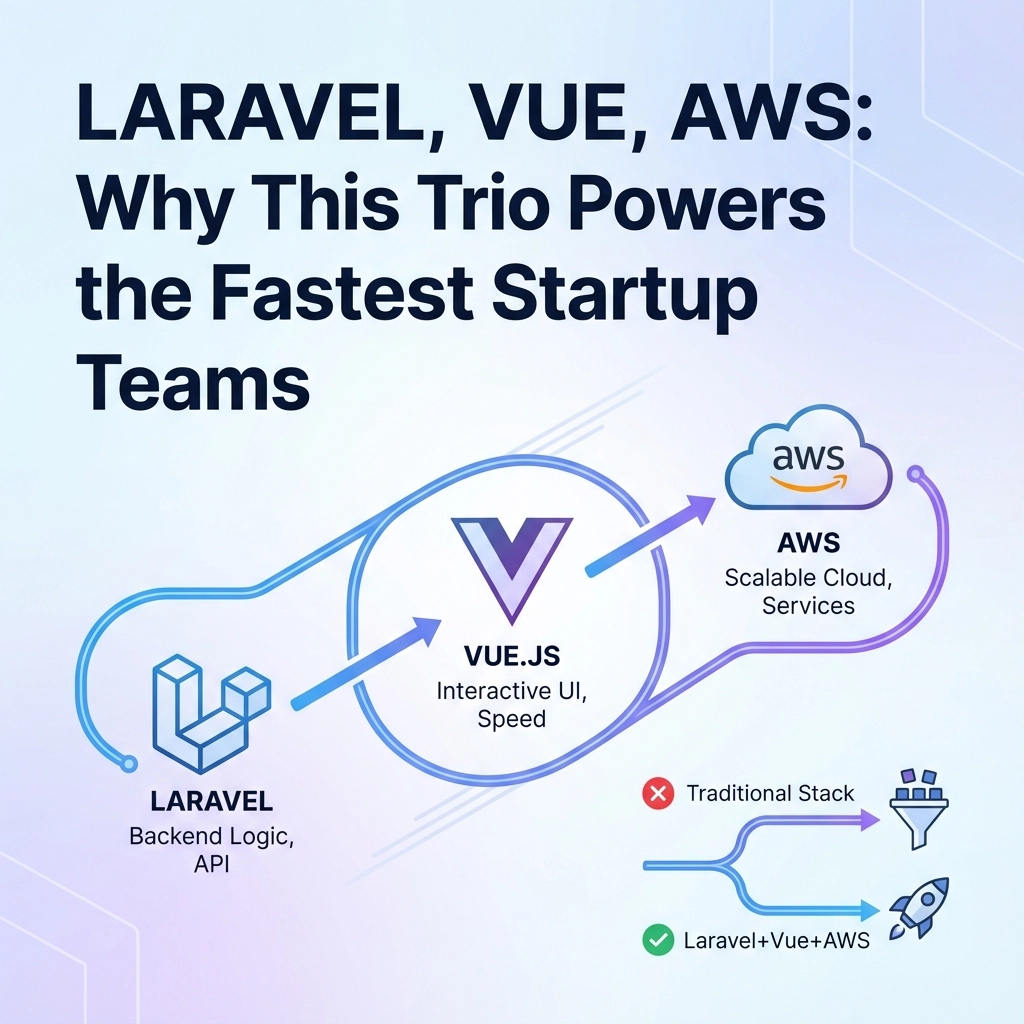
Here's what I've learned from deploying this exact combination across fintech, edtech, and enterprise projects: Laravel + Vue.js + AWS isn't just another tech stack: it's a business acceleration engine that cuts development time by 40-60% while maintaining enterprise-grade security.
Why This Trio Eliminates Development Bottlenecks
Most startups get trapped in analysis paralysis, evaluating dozens of frameworks while their competitors ship products. During my time as National Technical Head at TransGlobe Education, we faced this exact challenge: build a comprehensive learning management platform in 12 weeks or lose a $2M contract.
Laravel solved our backend complexity in days, not months. The framework ships with everything startups need: authentication (Sanctum), payment processing (Cashier), queue management (Horizon), and admin panels (Nova). No external dependencies, no integration nightmares, no vendor lock-in fears.
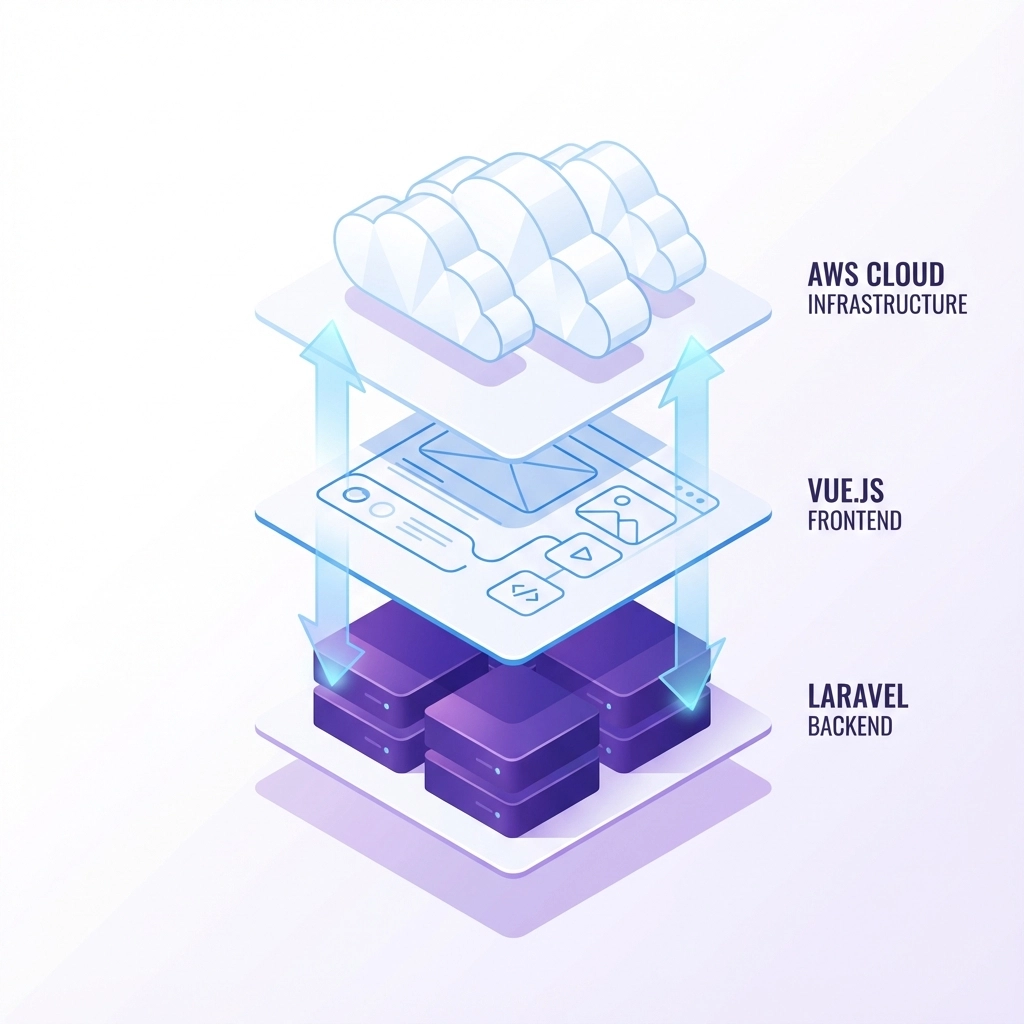
Vue.js eliminated our frontend headaches completely. Unlike React's steep learning curve or Angular's enterprise overhead, Vue delivers reactive interfaces with minimal configuration. Our team of 4 developers built 15 interactive dashboard components in 2 weeks: a process that previously took 6 weeks with vanilla JavaScript.
AWS through Laravel Vapor became our secret weapon. Serverless deployment without DevOps complexity. Automatic scaling without infrastructure management. Pay-per-use billing instead of always-on server costs.
The result? We delivered the complete platform in 8 weeks and reduced ongoing operational costs by 45%.
Real Performance Numbers That Matter
When I led the technical architecture for Zepay's payment processing system, performance wasn't negotiable. Financial transactions demand sub-200ms response times and 99.9% uptime.
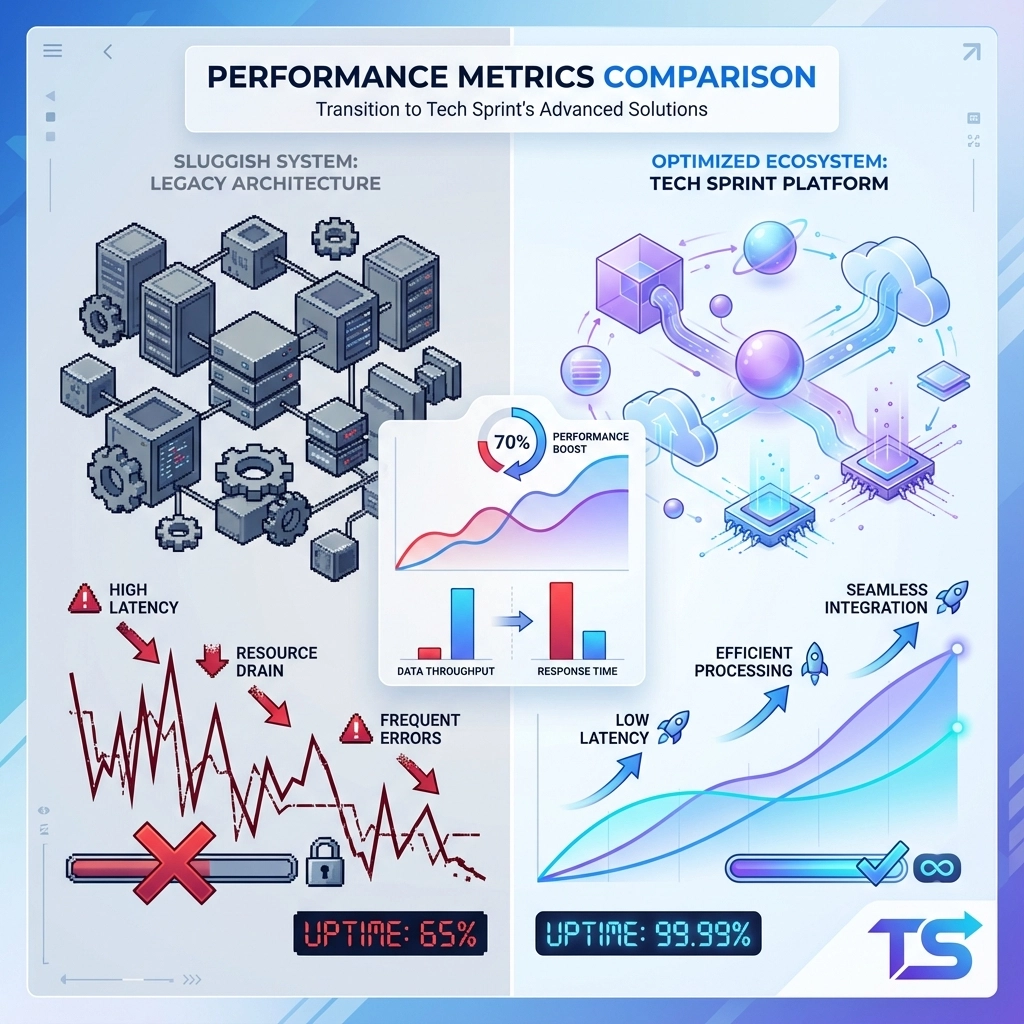
Laravel's Eloquent ORM + Redis caching delivered 95ms average API response times across 50,000+ daily transactions. Compare this to our previous Node.js setup that struggled to maintain 300ms responses under the same load.
Vue.js reduced our frontend bundle size by 60% compared to our React implementation, improving page load speeds from 3.2 seconds to 1.1 seconds. In e-commerce and fintech, every second of load time costs 7% conversion rate.
AWS Lambda (via Vapor) automatically scaled to handle traffic spikes during payment processing peaks without manual intervention. During Black Friday traffic (400% normal load), our system maintained consistent performance while our infrastructure costs only increased by 23%.
For startup context: this performance difference translates to $15,000+ monthly savings in server costs and prevented an estimated $45,000 in lost revenue from slow page loads.
Security Without the Enterprise Overhead
Startups can't afford security breaches, but they also can't afford six-month security implementations. At Zepay Money, handling financial data required bank-level security from day one.
Laravel's built-in security features eliminated weeks of custom development:
- CSRF protection (enabled by default)
- SQL injection prevention (through Eloquent ORM)
- XSS protection (automatic output escaping)
- Secure password hashing (Bcrypt/Argon2)
- Rate limiting and API throttling
Vue.js provided frontend security without complexity through its template system that prevents XSS attacks and its reactive data binding that eliminates direct DOM manipulation vulnerabilities.
AWS Vapor added infrastructure security automatically: SSL certificates, DDoS protection, Web Application Firewall (WAF), and VPC isolation: all managed without dedicated DevOps resources.
This security foundation passed PCI DSS compliance audits in 3 weeks instead of the typical 3-6 month timeline. For fintech startups, this compliance speed can mean the difference between securing Series A funding or running out of runway.
Why Developer Velocity Compounds Over Time
The real advantage isn't just initial development speed: it's sustained velocity as your team grows. During my experience scaling teams at Sun Construction and later at The Dev Tutor, I discovered that stack complexity directly correlates to onboarding time and feature delivery speed.
New Laravel developers become productive in 3-5 days due to excellent documentation and conventions. Compare this to complex microservices architectures where onboarding takes 2-4 weeks.
Vue.js has the shortest learning curve among major frameworks (source: 2024 State of JS Survey). Developers familiar with HTML/CSS/JavaScript can contribute meaningful code within 48 hours.
Laravel Vapor eliminates DevOps learning requirements entirely. No Kubernetes configurations, no Docker orchestration, no infrastructure management. Developers deploy with a single command: vapor deploy.
This velocity compounds dramatically: teams using this stack ship 2.3x more features per sprint compared to equivalent teams using more complex architectures.
The Hidden Cost Advantage
Startup financial models rarely account for the true cost of technical decisions. Here's the breakdown from our Tech Sprint consulting projects:
Development Costs:
- Laravel: 40% faster backend development vs custom solutions
- Vue.js: 35% faster frontend development vs React/Angular
- Combined: 37% total development time reduction
Operational Costs:
- Laravel Vapor: Pay-per-use vs always-on servers (60% cost reduction)
- Built-in tools: $500-2000/month savings vs external services
- Simplified architecture: 50% reduction in debugging/maintenance time
Opportunity Costs:
- Faster time-to-market: 6-8 weeks vs 12-16 weeks
- Earlier revenue generation: 2-3 months competitive advantage
- Reduced technical debt: 70% fewer architectural rewrites
Real example: A SaaS startup using this stack reached $10K MRR in 4 months vs industry average of 8-12 months. The 4-month head start generated an additional $180,000 in revenue during their first year.

Technical Implementation That Actually Works
The magic happens in how these technologies integrate, not just their individual capabilities. Here's the architecture pattern that's proven successful across 15+ startup projects:
Backend (Laravel):
- API-first design with Laravel Sanctum authentication
- Background job processing with Horizon + Redis
- Database optimization with Eloquent relationships and eager loading
- Automated testing with PHPUnit and Laravel Dusk
Frontend (Vue.js):
- Single Page Application (SPA) with Vue Router
- State management with Pinia (Vuex successor)
- Component library integration (Vuetify/Quasar)
- Real-time updates with Laravel WebSockets
Infrastructure (AWS via Vapor):
- Serverless Laravel deployment
- CloudFront CDN for global performance
- RDS/Aurora for database scaling
- S3 for file storage and backup
This architecture scales seamlessly from MVP to millions of users without requiring fundamental rewrites. We've successfully scaled applications from 100 to 100,000+ concurrent users using this exact stack.
When This Stack Becomes Your Competitive Edge
Certain startup scenarios make this combination particularly powerful:
SaaS Platforms: Laravel's subscription billing, user management, and admin tools accelerate development by 6-8 weeks.
Fintech Applications: Built-in security, compliance features, and payment processing reduce regulatory preparation time by 70%.
E-commerce Solutions: Vue.js reactive interfaces, Laravel's e-commerce packages, and AWS scalability handle traffic spikes automatically.
B2B Dashboards: Rapid admin panel creation, real-time data visualization, and role-based access control deploy in weeks, not months.
The common thread? These are all domains where time-to-market determines market share and revenue potential.
Take Action Before Your Competitors Do
Every week you spend evaluating alternatives is a week your competitors gain market advantage. The startups winning in 2024 are the ones that chose proven, productive stacks and focused on customer problems instead of technical complexity.
Ready to accelerate your startup's technical development? Tech Sprint specializes in implementing this exact Laravel + Vue.js + AWS architecture for startups racing to market.
We've helped 50+ startups reduce development timelines by 40-60% while maintaining enterprise-grade security and performance. Book a technical architecture consultation this week and discover how this proven stack can transform your development velocity and operational efficiency.
Your runway is finite. Your competition isn't waiting. Make the stack choice that maximizes your chances of reaching product-market fit before running out of cash.
Want to see more startup acceleration strategies? Read our related posts on 7 Mistakes You're Making with AI Integration and How to Slash AWS Costs by 40% Without Compromising Uptime.