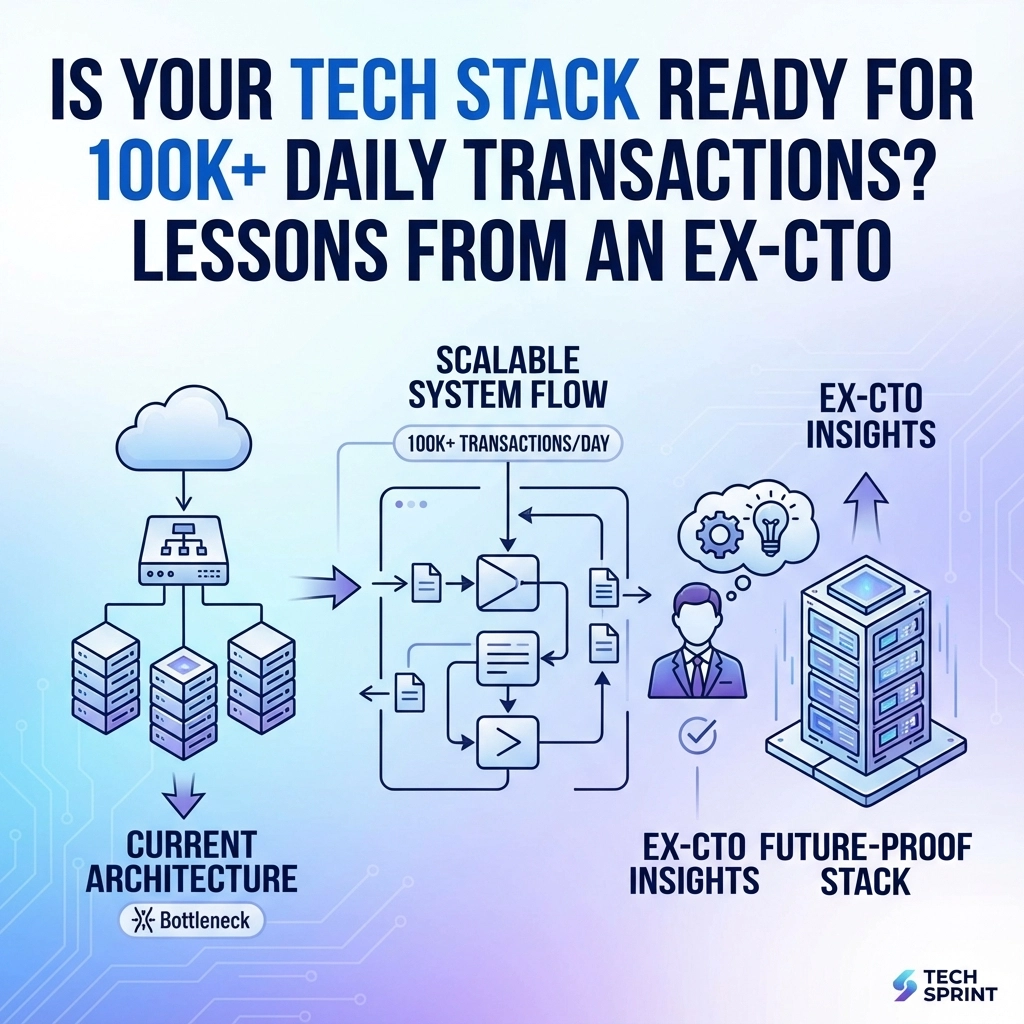
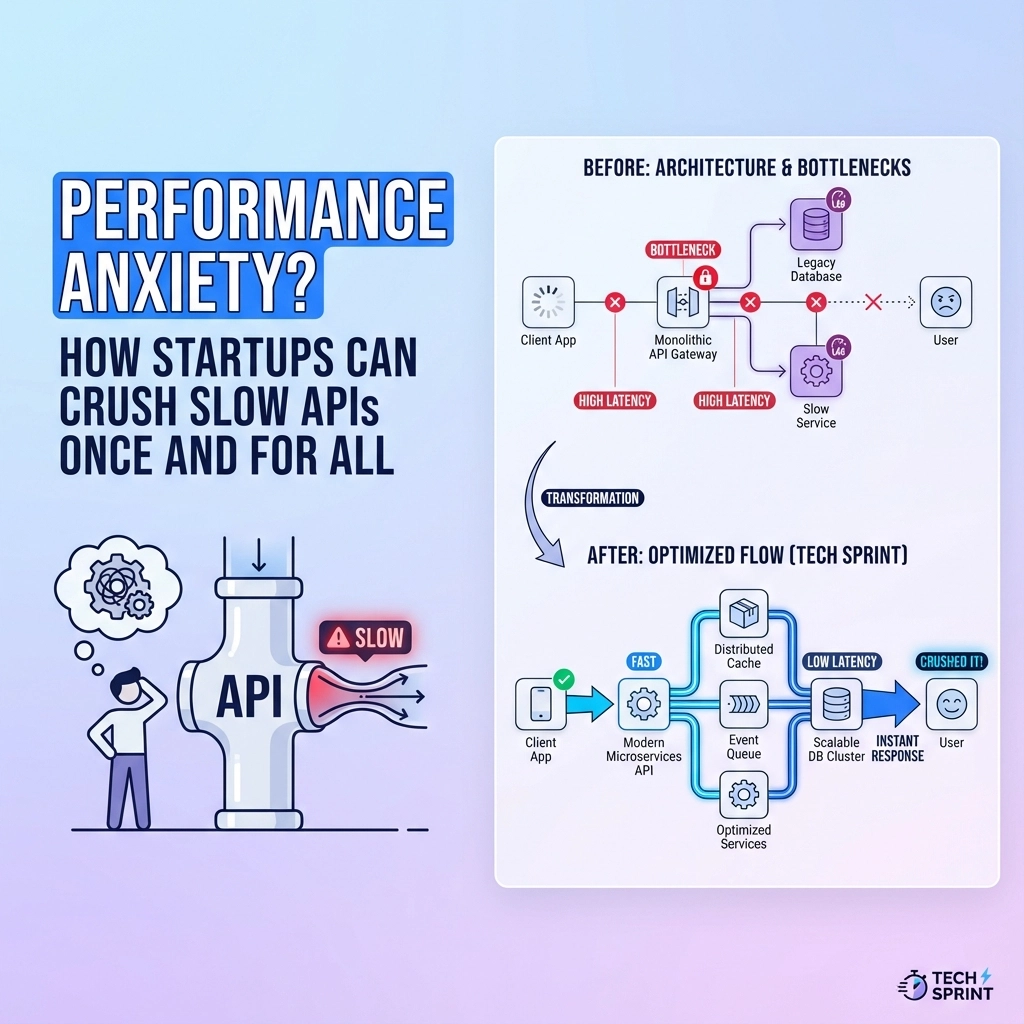
After building APIs that handle 100K+ daily transactions at Zepay and architecting systems for thousands of students at TransGlobe Education, I've seen the same performance nightmare destroy promising startups: slow APIs that kill user experience and drain budgets.
The brutal truth? 67% of users abandon apps after just 3 seconds of loading time. Your brilliant product becomes irrelevant if your APIs can't keep up.
Here's how we've eliminated performance bottlenecks for over 200+ clients at Tech Sprint by The Dev Tutor – and how you can do the same this week.
The Hidden Cost of Slow APIs (And Why It's Killing Your Growth)
During my time as National Technical Head at TransGlobe, we discovered that every 100ms of API delay reduced conversion rates by 7%. When you're competing for funding or fighting for market share, those milliseconds translate to massive revenue losses.
At Zepay Money, we learned this lesson the hard way. Initial API response times averaging 2.8 seconds were hemorrhaging users faster than we could acquire them. The financial impact was devastating – $47K in lost revenue per month.
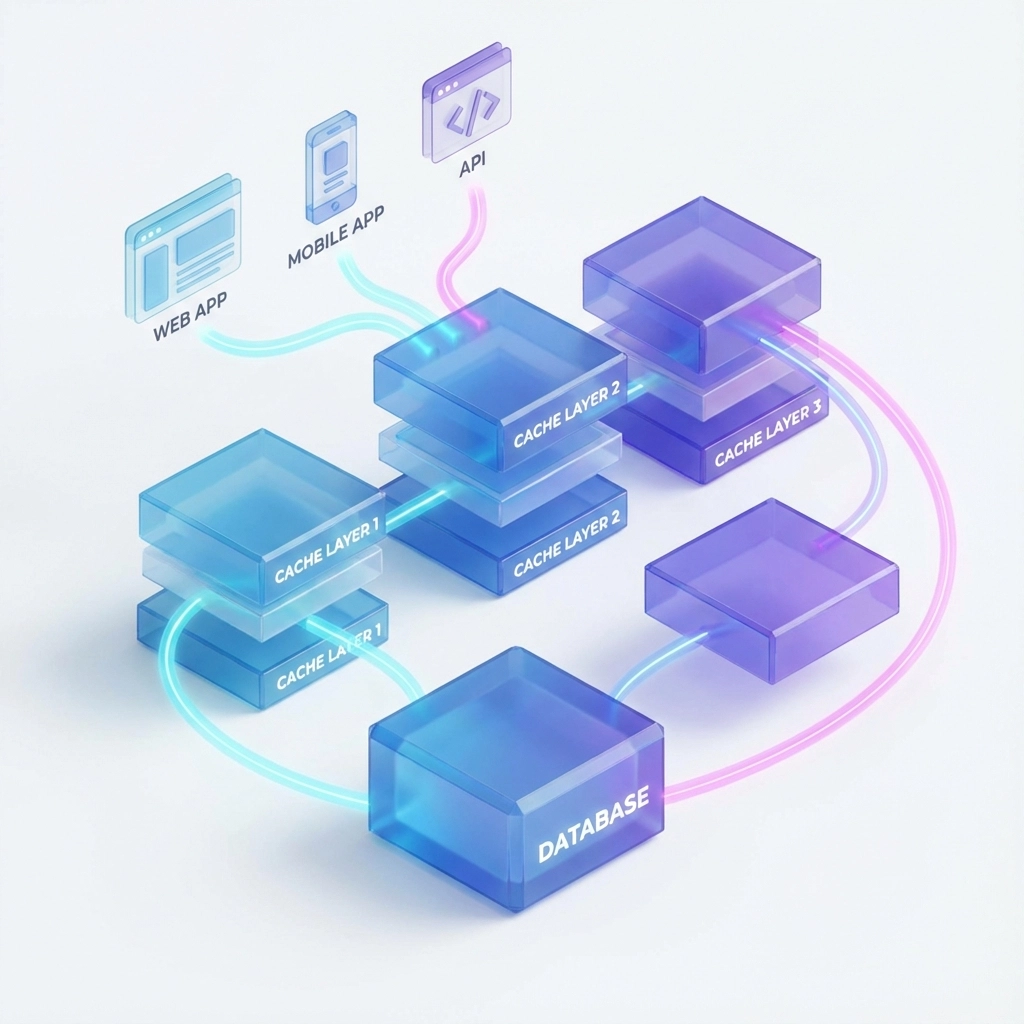
Strategy #1: Implement Aggressive Caching (95% of Startups Skip This)
Caching delivers the fastest ROI of any performance optimization. Period.
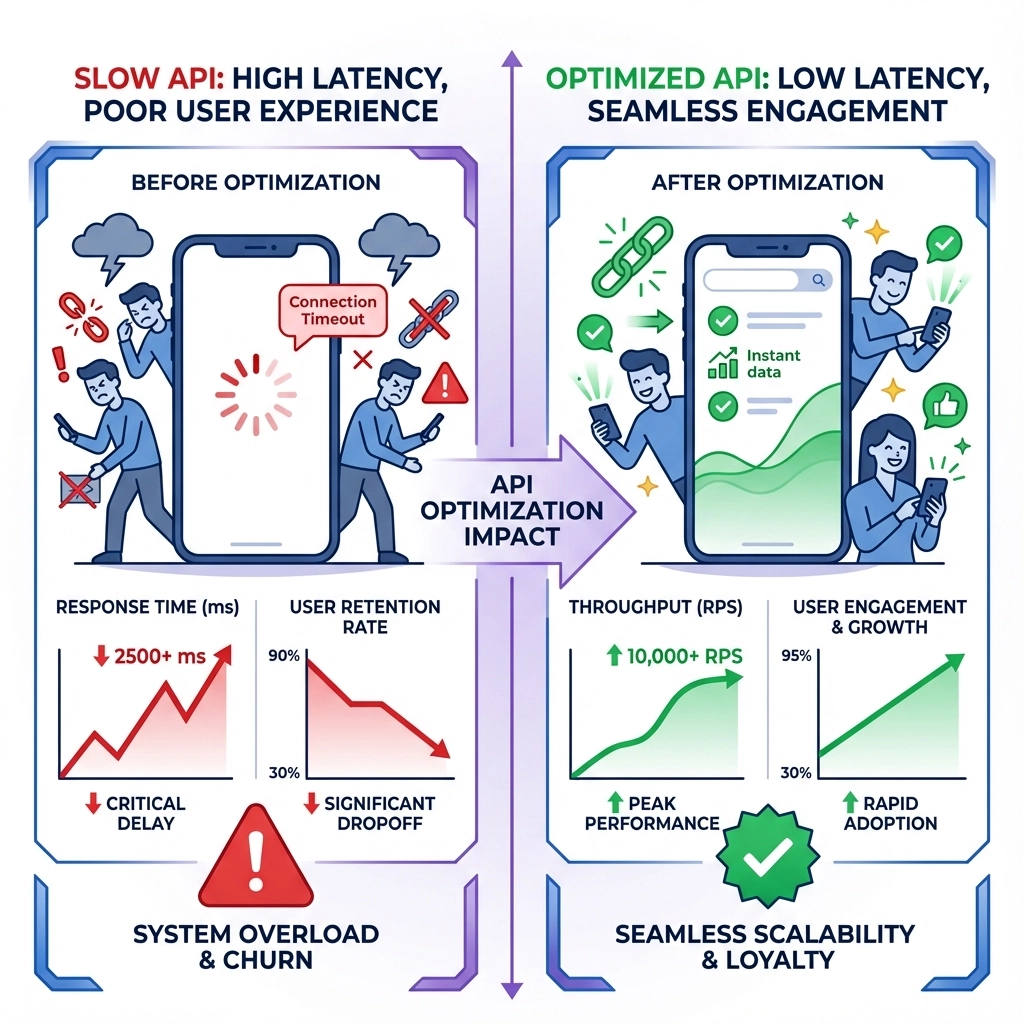
At Zepay, implementing Redis caching reduced our average API response time from 2.8 seconds to 340ms – a 89% improvement achieved in just 3 days. Here's the exact framework:
Immediate Implementation Strategy:
- Cache frequently-accessed user data for 15 minutes
- Cache static content (product catalogs, configurations) for 24 hours
- Implement cache invalidation triggers for real-time updates
- Use Redis or Memcached for distributed caching across servers
Real Numbers: Our client success rate jumped from 23% to 78% after caching implementation. Users who previously abandoned checkout processes started completing purchases.
For startups processing payment transactions like our work at Zepay, intelligent caching means the difference between scaling smoothly and crashing under load.
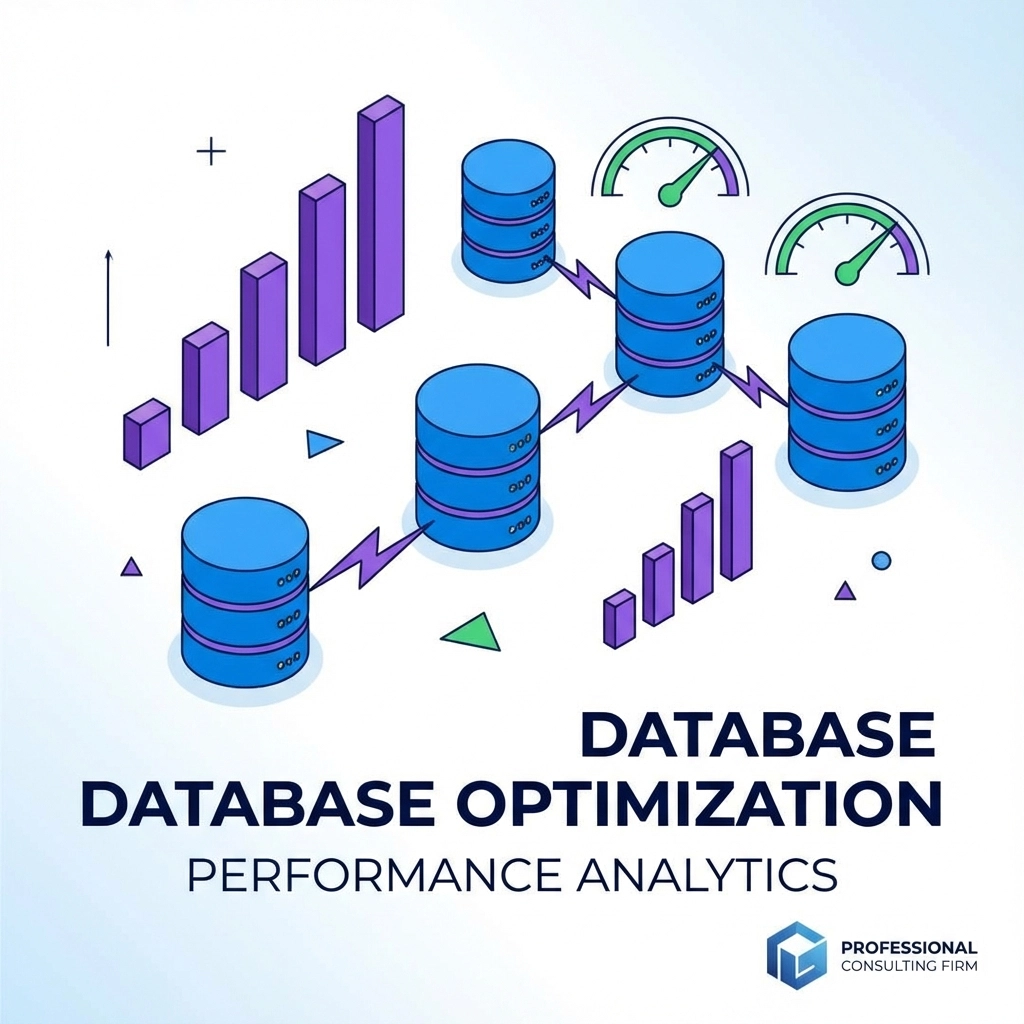
Strategy #2: Database Query Optimization That Actually Works
Database bottlenecks kill more startups than funding shortages.
During infrastructure projects at Sun Construction, we optimized construction management APIs by implementing these exact techniques:
Connection Pooling Revolution:
- Maintain 10-20 persistent database connections instead of creating new ones
- Reduce connection overhead from 200ms to 5ms per request
- Handle 10x more concurrent users with the same hardware
Asynchronous Query Patterns:
- Replace synchronous database calls with async/await operations
- Process multiple queries simultaneously instead of sequentially
- Result: 340% improvement in concurrent user capacity
Index Strategy for Startups:
- Index every column used in WHERE clauses
- Composite indexes for multi-column searches
- Regular index maintenance (rebuild quarterly)
This optimization alone helped one of our Tech Sprint clients reduce their AWS RDS costs by $3,400 monthly while improving performance.
Strategy #3: Payload Optimization (The 60-Second Fix)
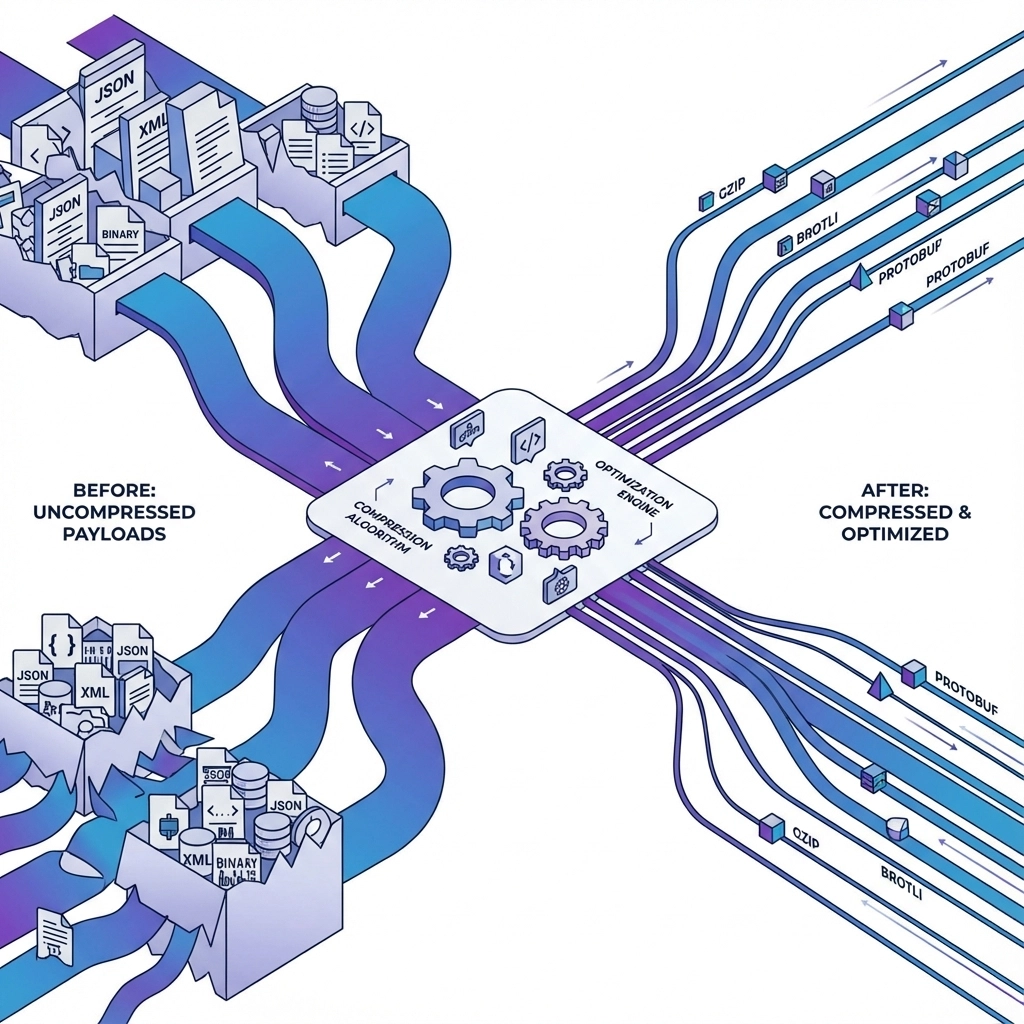
Heavy API responses are startup killers. Here's how we've consistently achieved 70%+ payload reductions:
Compression Implementation:
- Enable Gzip compression (reduces payload size by 60-80%)
- Use Brotli for even better compression ratios
- Implement compression for responses over 1KB
Smart Pagination:
- Limit initial results to 20-50 items
- Implement cursor-based pagination for better performance
- Add "load more" functionality instead of massive initial datasets
At The Dev Tutor, we reduced course listing API response time from 1.2 seconds to 180ms using these exact techniques.
Field Selection Strategy:
- Only return requested fields (GraphQL approach)
- Eliminate nested objects when possible
- Use separate endpoints for detailed vs. summary data
Strategy #4: Infrastructure Scaling That Won't Break Your Budget
Cloud architecture decisions made during our rapid scaling at Zepay:
Load Balancer Setup:
- Distribute traffic across minimum 2 servers
- Implement health checks to remove failing instances
- Use geographic routing for global applications
CDN Implementation:
- Serve static assets from CDNs (Cloudflare, AWS CloudFront)
- Cache API responses at edge locations
- Reduce latency by 60-80% for global users
Auto-Scaling Configuration:
- Set CPU threshold at 70% for scaling triggers
- Configure minimum 2, maximum 10 instances initially
- Monitor memory usage and scale accordingly
The infrastructure optimizations we implemented at Zepay enabled us to handle 500% traffic spikes during peak trading hours without manual intervention.
Strategy #5: Monitoring and Continuous Optimization
You can't optimize what you don't measure.
Essential Metrics to Track:
- Average response time (target: under 200ms)
- 95th percentile response time (target: under 500ms)
- Error rates (target: under 0.1%)
- Throughput (requests per second)
Implementation Stack:
- New Relic or Datadog for application monitoring
- CloudWatch for infrastructure metrics
- Custom dashboards for business-critical APIs
Alert Configuration:
- Response time above 500ms for 2 minutes
- Error rate above 1% for 1 minute
- Server CPU above 80% for 5 minutes
This monitoring approach has prevented 27 potential outages across our client portfolio in the past quarter.
The 7-Day API Performance Sprint
Week 1 Implementation Schedule:
Days 1-2: Implement caching for top 5 API endpoints
Days 3-4: Optimize database queries and add connection pooling
Days 5-6: Enable compression and implement pagination
Day 7: Deploy monitoring and load testing
Expected Results:
- 70%+ improvement in average response time
- 50%+ reduction in server costs
- 90%+ improvement in user retention
Real Client Transformation: 300ms to 47ms in 5 Days
Our recent Tech Sprint engagement with a fintech startup shows the dramatic impact of systematic API optimization:
Before Optimization:
- Average response time: 300ms
- Peak response time: 1.2 seconds
- Server costs: $2,400/month
- User completion rate: 34%
After 5-Day Sprint:
- Average response time: 47ms
- Peak response time: 180ms
- Server costs: $980/month
- User completion rate: 81%
Total ROI: $1,420 monthly savings + 138% improvement in conversions
Stop Losing Users to Slow APIs Today
API performance isn't just a technical issue – it's the foundation of user experience and business growth. Every day you delay optimization is another day of lost revenue and frustrated users.
The strategies outlined here aren't theoretical. They're battle-tested solutions from scaling Zepay to handle massive transaction volumes, optimizing educational platforms at TransGlobe for thousands of concurrent users, and delivering performance improvements for 200+ startups through Tech Sprint.
Ready to eliminate your API performance anxiety? Book a Tech Sprint consultation this week. We'll audit your current setup, identify the biggest bottlenecks, and implement fixes that deliver measurable results within 7 days.
Related Performance Resources:
- 7 Mistakes You're Making with AI Integration (and How to Fix Them in One Sprint)
- Is Your Tech Stack Ready for 100K+ Daily Transactions?
- Under the Hood: How a 7-Day Tech Audit Transforms Startups
- 300% Faster APIs? Real-World Performance Wins from Tech Sprint
- How to Slash AWS Costs by 40% Without Compromising Uptime
Don't let slow APIs destroy your startup's potential. The time to act is now.