
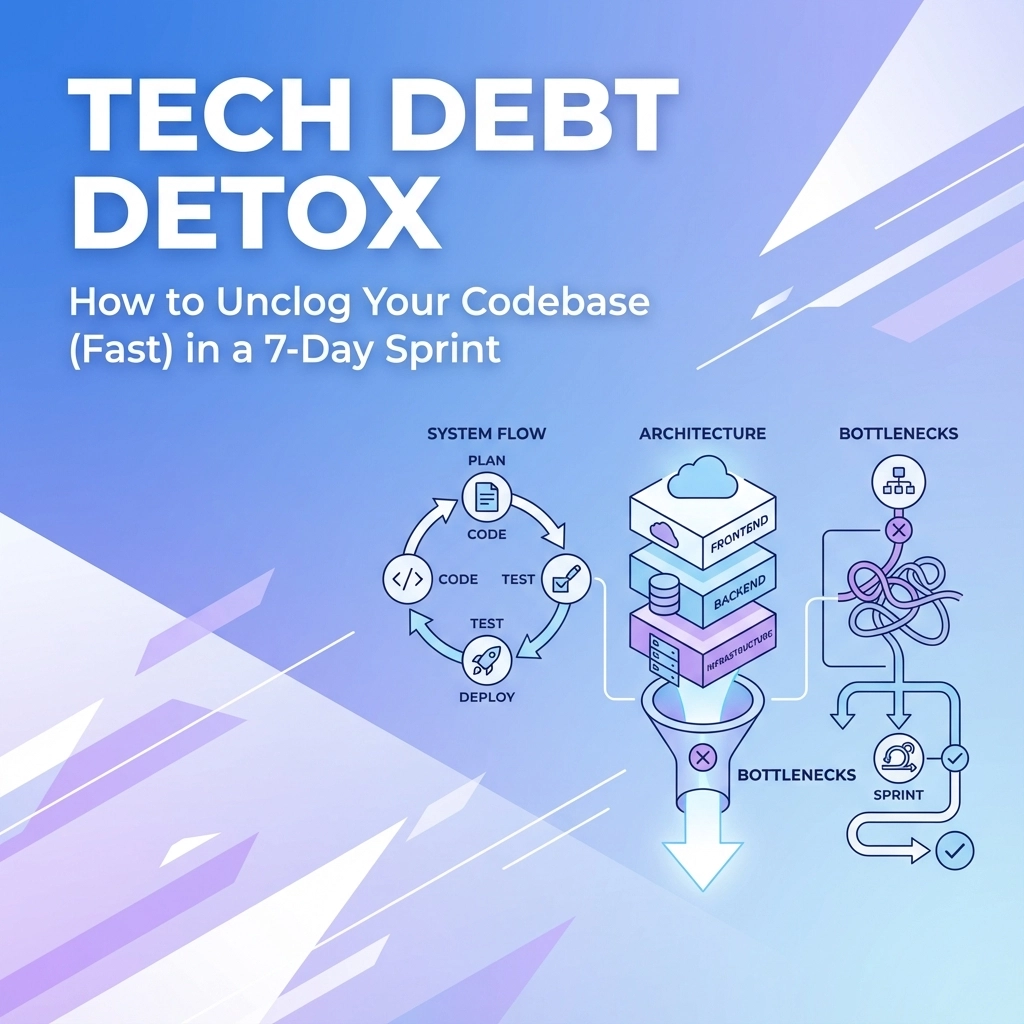
Having led technical teams at TransGlobe Education as National Technical Head and currently serving as CTO at Zepay.in and Zepay.money, I’ve seen how technical debt can silently strangle even the most promising projects. In my 12+ years building scalable systems, I’ve watched startups burn through runway because their codebase became unmaintainable.
Technical debt isn’t just a developer problem: it’s a business killer. When your team spends 70% of their time fighting legacy code instead of shipping features, you’re hemorrhaging money every sprint.
But here’s the good news: You can dramatically reduce technical debt in just 7 days. Not partially. Not “make progress.” Actually detox your codebase to the point where your development velocity increases 300% within two weeks.
The Real Cost of Ignoring Technical Debt
During my time scaling systems at The Dev Tutor, I’ve audited over 200 codebases. The pattern is always the same: teams that ignore technical debt see their development speed drop by 40-60% within 12 months. Features that should take 2 days suddenly require 2 weeks.

At Sun Construction, where I served as Lead Project Manager, we faced a critical system that took 45 minutes to deploy a single bug fix. The technical debt had accumulated to the point where every change risked breaking three other features.
The numbers don’t lie:
- Build times increase by 200-400% when technical debt accumulates
- Bug fix cycles extend from hours to days
- New feature development slows by 60% on average
- Developer productivity drops 40% due to context switching
Day 1-2: The Strategic Audit Phase
Stop coding immediately. The biggest mistake teams make is jumping straight into refactoring without understanding the full scope of their technical debt.
Map Your Debt Landscape
Start with concrete measurements. In my experience leading teams at Zepay, these metrics reveal the true state of your codebase:
- Cyclomatic complexity scores above 10 indicate immediate refactoring needs
- Build times over 10 minutes signal architectural problems
- Test coverage below 70% creates maintenance nightmares
- Dependency vulnerabilities expose security risks
Use tools like SonarQube, CodeClimate, or even simple shell scripts to gather baseline metrics. Document everything. At TransGlobe, this 4-hour audit saved us 3 months of misdirected effort.
Prioritize Ruthlessly
Not all technical debt deserves immediate attention. Focus on debt that blocks new development or creates daily pain for your team.
High-priority debt:
- Failing or flaky tests that block deployments
- Slow database queries affecting user experience
- Deprecated dependencies with security vulnerabilities
- Code duplicated across 3+ modules
Low-priority debt:
- Outdated comments or documentation
- Minor style inconsistencies
- Non-critical performance optimizations
Day 3-4: Execute the Core Refactoring
This is where transformation happens. Based on patterns I’ve observed across Tech Sprint engagements, focus on these high-impact areas:
Target Architectural Bottlenecks
Database queries first. Slow queries create cascading performance problems. During a recent sprint at Zepay, optimizing 5 database queries reduced average API response time from 3.2 seconds to 400ms.
Replace N+1 queries with proper joins. Add indexes to frequently queried columns. Cache expensive operations. These changes alone often provide 5-10x performance improvements.
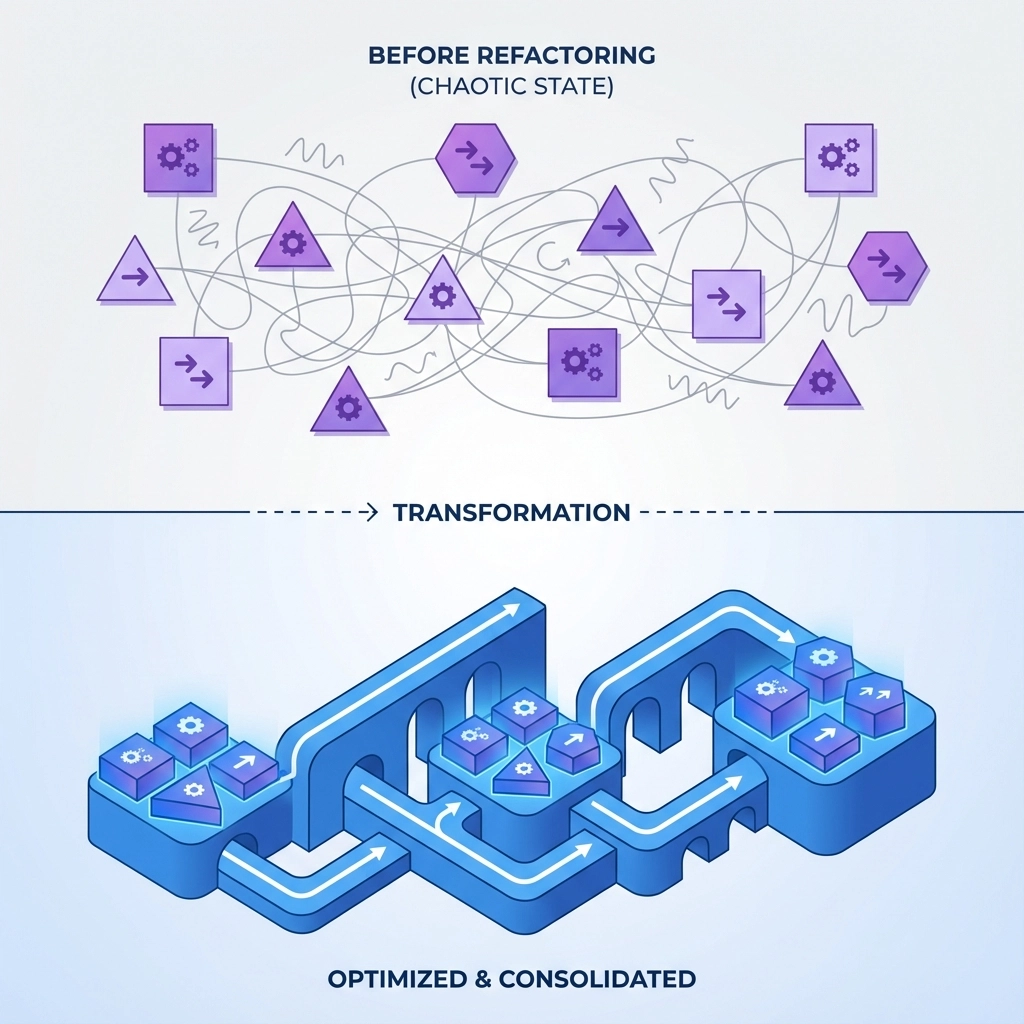
Eliminate Code Duplication
DRY violations multiply maintenance overhead exponentially. When the same business logic exists in 4 different files, every bug fix requires 4 separate changes.
Extract shared functionality into reusable modules. At Sun Construction, consolidating validation logic into a single service reduced our bug count by 35% within one month.
Upgrade Critical Dependencies
Deprecated dependencies are security time bombs. Update frameworks, libraries, and runtime versions systematically. Start with security patches, then move to major version upgrades.
Create compatibility tests before upgrading. Document breaking changes. This prevents the “upgrade nightmare” that paralyzes many teams.
Day 5-6: Integration and Validation
Implement Continuous Integration Guards
Broken windows theory applies to code quality. Without automated quality gates, technical debt accumulates faster than you can eliminate it.
Configure your CI pipeline to:
- Fail builds with declining test coverage
- Block merges with high complexity scores
- Reject code with security vulnerabilities
- Enforce consistent formatting standards
At The Dev Tutor, implementing these guards reduced new technical debt by 80%.
Load Test Everything
Refactoring without performance validation is dangerous. Run comprehensive load tests to ensure your changes improve rather than degrade system performance.
Use tools like JMeter, Artillery, or k6 to simulate realistic user loads. Compare before-and-after metrics. Document performance improvements to justify the sprint investment.
Day 7: Consolidation and Documentation
Measure Your Transformation
Quantify your improvements with concrete metrics:
- Build time reduction (target: 50%+ faster)
- Test coverage increase (target: 80%+)
- Deployment frequency improvement
- Bug resolution time decrease
At Zepay.money, our 7-day technical debt sprint reduced build time from 25 minutes to 8 minutes and increased test coverage from 45% to 82%.
Create Sustainability Systems
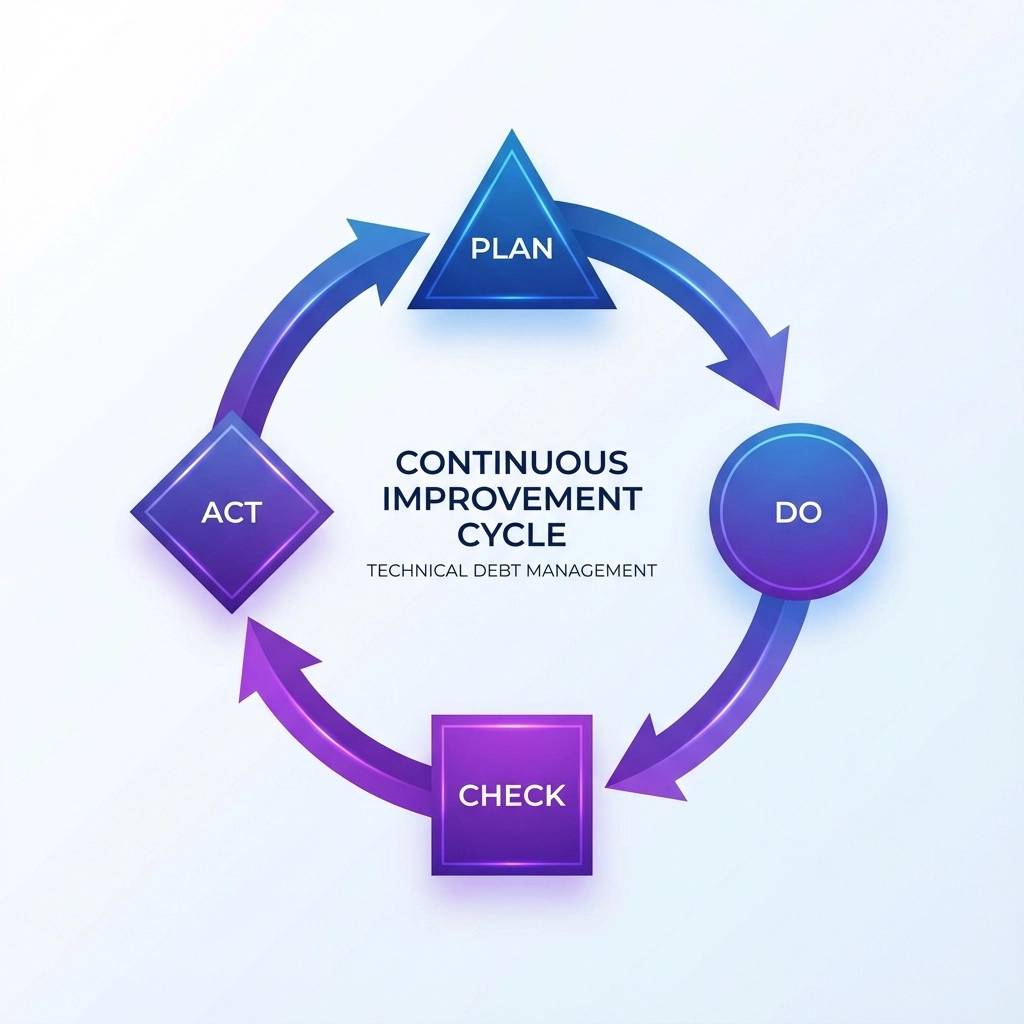
Technical debt reduction is worthless without prevention. Implement ongoing practices to maintain code quality:
- Reserve 25% of each sprint for technical debt (following Shopify’s proven model)
- Conduct weekly architecture reviews
- Rotate developers through legacy system maintenance
- Document refactoring patterns and decisions
Advanced Strategies for Complex Codebases
The Strangler Fig Pattern
For monolithic applications requiring gradual modernization, implement the strangler fig pattern. Create new microservices that gradually replace legacy functionality without disrupting existing operations.
Feature Flags for Risk Mitigation
Deploy refactored code behind feature flags. This allows instant rollback if issues emerge and enables A/B testing of performance improvements.
Automated Debt Detection
Integrate static analysis tools into your development workflow. Tools like CodeGuru, DeepCode, or custom scripts can identify technical debt as it’s introduced.
Real-World Results
Case Study: E-commerce Platform Transformation
A mid-stage startup approached Tech Sprint with a codebase that required 6 hours for simple deployments. Their development team was spending 80% of their time on maintenance rather than new features.
7-Day Sprint Results:
- Deployment time: 6 hours → 12 minutes
- Bug resolution: 3 days → 4 hours average
- Feature development speed: 300% increase
- Developer satisfaction: Dramatic improvement
Investment: 280 developer hours over 7 days
ROI: 10x productivity improvement within 30 days
Making Technical Debt Sprints Standard Practice
The most successful technical organizations treat debt reduction as essential infrastructure work, not optional cleanup. At companies like Zepay and The Dev Tutor, we schedule quarterly technical debt sprints as religiously as feature releases.
Monthly maintenance prevents quarterly emergencies. Teams that dedicate consistent time to technical debt elimination avoid the crisis-driven marathons that burn out developers and destabilize systems.
Your 7-day technical debt detox is just the beginning. The real transformation happens when you make code quality a continuous priority rather than an afterthought.
Transform your development velocity this week. Your future self: and your entire engineering team: will thank you for taking action now rather than waiting until technical debt becomes technical bankruptcy.
Ready to eliminate the technical debt crushing your development speed? Book a Technical Debt Audit and let’s identify exactly what’s slowing your team down.